Pellet Grill Smoked Turkey – Wet Brine and Smoke

on Nov 01, 2019, Updated Nov 18, 2026
This post may contain affiliate links. Please read our disclosure policy.
As the holiday season approaches, there’s nothing more inviting than a Pellet Grill Smoked Turkey gracing the dinner table. This time of year is all about family, friends, and delish meals that leave lasting memories. When everyone gathers around, eager for that first slice of turkey, you’ll want to present an unforgettable turkey centerpiece for Thanksgiving.

Table of Contents
- 🤘 This Pellet Grill Turkey Recipe Rocks!
- 🗒️ What You Need to Brine a Turkey
- ✅ How to Brine a Turkey
- 💨 How to Smoke the Turkey
- 🤔 Recipe Variations For The Brine
- ⏲️ Timetable for Pellet Grill Smoked Turkey
- 👨🍳 Pro Tips for Successful Smoking
- 🌡️ Smoking According to Temperature
- 🪐 Universal Appeal: This Recipe Works with Any Pellet Grill or Smoker
- 🫙 Storing Leftover Turkey
- 🥡 Reheating Your Smoked Turkey
- ❓ FAQ
- 🦃 Other Juicy Turkey Recipes!
- 🔥 More Smoked Recipes
- 🎁 Now Go Fire up That Smoker
- 💬 Tell Me What You Think!
- CONNECT WITH A LICENSE TO GRILL!
- Pellet Grill Smoked Turkey Recipe
Enter our easy-to-follow, beginner-friendly recipe! Thanks to the magic of wet brining, each bite promises to be succulent and bursting with flavors soaked up from the brine. The turkey soaks up the juice and flavors from the brine, and the added salt helps trap those juices so that it does not dry out as the turkey cooks. And, should you wish to add your own spin, we’ve got a plethora of variations to suit every taste. Using your reliable pellet grill smoker, or any smoker really, prepare to impress and create new holiday traditions with this show-stopping turkey.
🤘 This Pellet Grill Turkey Recipe Rocks!
- Flavor infusion from the wet brine: The turkey soaks in a brine rich with juices and aromatics like oranges, lemons, and bay leaves, as well as kosher salt and brown sugar. This not only ensures the meat remains juicy, but it infuses the turkey with a deep, flavorful profile.
- Crispy, golden-brown skin: Smoking the turkey on the pellet grill after it’s been soaked in brine and rubbed with butter ensures a crisp, golden-brown skin, which is both visually appealing and deliciously satisfying with each bite.
- Deep smoky notes from the pellet grill: Smoked turkey on a Traeger grill lends the meat a distinct smokiness that’s hard to achieve with other cooking methods. This smokiness complements the brined flavors perfectly. Use your favorite wood pellets!
- Variety of brining options: From the citrusy and aromatic orange brine with herbs to the sweet and spicy salt-kissed honey and garlic turkey brine, there are numerous variations available to cater to different taste preferences.
- Adaptability across pellet grills: The recipe isn’t restricted to a particular brand or model of pellet grill. Whether you’re using a Traeger, Pit Boss, Camp Chef, or stick burner, this recipe promises universally delicious results.
- Thorough cooking guidelines: Use the timetable to plan your meal, but rely on thermometer checks to judge doneness. Monitor the turkey through its rest and verify the final temperature rather than assuming carryover will finish the job.
- A festive centerpiece: Beyond its taste, a pellet grill smoked turkey makes for a magnificent centerpiece at Thanksgiving and Christmas dinners. It will be the talk of the table!
🗒️ What You Need to Brine a Turkey
- A large waterproof container. Get one that is large enough for the turkey brine liquid to cover the entire turkey. The produce drawer in your fridge is usually large enough but it is better to use a food-grade Rubbermaid or turkey brine bag.
- Kosher salt. Be sure to use coarse Kosher salt.
- Sugar. I’m using brown sugar for a touch of molasses flavor.
- Aromatics like oranges, lemons, and bay leaves. These are optional but nice. The important thing is the salt. You MUST use salt for the brine.
- Water. Start with warm water so the salt dissolves faster, then add cold water or ice to cool down the water. You don’t want to soak the turkey in warm water.
We used a 20-pound turkey in the video. It was a little too tall to fit in the produce drawer from the fridge, so we used a large Tupperware storage container for the brine. It held 8 quarts of water, so I had to double the brining solution.
✅ How to Brine a Turkey
Wet brining a turkey overnight allows the meat to soak up the juices in the brine so that when you are ready to cook the turkey the next day on Thanksgiving, you end up with the juiciest, full-flavor turkey ever! Turkey is a relatively lean meat, and there is not much fat on the bird, so we have to rely on a brine to provide the juicy flavor that makes the holiday dinner a hit. To prepare your brine, follow these easy steps:
- Place the turkey in a large container.
- Soak the turkey in the brine and add aromatics if desired. Ensure the turkey is completely covered in the brining liquid.
- Allow the turkey to soak overnight. If you can brine the turkey for 24 hours, it will be incredibly juicy!
- Rinse and pat the turkey dry. Allow it to sit in the fridge for several hours to completely dry before smoking.
💨 How to Smoke the Turkey
- Fire up your pellet grill smoker. Use your favorite pellets and set the temp to 225°F. Close the lid and let it preheat.
- Once your turkey is dry, place it in a roasting pan. Rub the entire bird with the softened butter. Get some butter under the skin, too.
- Stuff the turkey with onion, lemon, garlic cloves, and fresh herbs.
- Place the turkey on the pellet grill and insert your thermometer probe into the thickest part of the turkey breast.
- Smoke until the internal temperature of the turkey breast reaches 110°F.
- Increase the pellet grill to 350°F. Check several spots in the thickest breast and innermost thigh and wing, avoiding bone. Pull the turkey when the breast reaches 160°F only if the thigh and wing are at least 165°F. See the temperature notes below.
- Loosely tent the turkey with foil and leave the probe in the breast. Monitor it during the rest and verify it reaches 165°F before carving. If it stops rising below 165°F, promptly return it to the heat. Rest for 20 minutes total.

🤔 Recipe Variations For The Brine
Sometimes, the secret to a memorable Thanksgiving turkey isn’t just in the roasting or smoking; it’s in the brine that sets the stage. We’ve come up with four exciting variations to give your turkey that extra oomph. From the zesty to the smoky, these recipes serve as the foundation for flavors that truly penetrate every juicy bite of your bird.
Orange Brine with Herbs
For an aromatic and citrusy spin on the classic wet-brined turkey, include the zest and juice of 4 oranges in the mixture or use part of a can of frozen concentrated orange juice.
For added aromatics, toss in a handful of fresh rosemary, sage, and thyme sprigs to the brining liquid. Follow the rest of the original recipe, but make sure to also stuff the turkey cavity with some orange slices and herbs.
Salt Kissed Honey and Garlic Turkey Brine
Add 1 cup of honey and 8-10 minced garlic cloves to the brine. This turkey has a sweet, garlicky note that pairs exceptionally well with smoky flavors. When you’re ready to smoke, rub a mixture of 2 tablespoons of honey, two tablespoons of brown sugar, one tablespoon of soy sauce, and some minced garlic under the turkey skin.
BBQ Flavored Wet Brine
Incorporate 1 cup of your favorite BBQ sauce into the brine. When you are ready to smoke the turkey, rub it with a BBQ dry rub. As the turkey smokes, mop it every hour with a bit more BBQ sauce. 4. Spiced Apple Cider Wet Brined Smoked Turkey.
⏲️ Timetable for Pellet Grill Smoked Turkey
Here is a general guideline for how long it will take to finish smoking your turkey on Thanksgiving or Christmas Day. Use this as a guideline to plan your dinner but make sure you cook the turkey to the proper temperature.
This timetable is based on the temperature settings in the recipe card. If you use a different temperature, the timing will change. You will also affect the time if you open the grill frequently.
| Turkey Size | Smoking Time |
|---|---|
| 8 to 10 pounds | 2½ – 3¼ hours |
| 10 to 12 pounds | 3 – 4 hours |
| 12 to 14 pounds | 3½ – 4½ hours |
| 14 to 16 pounds | 4¼ – 5⅓ hours |
| 16 to 18 pounds | 5 – 6 hours |
| 18 to 20 pounds | 5½ – 6¾ hours |
If you have a different-sized bird, then calculate the smoking time at 18 to 20 minutes per pound. Keep in mind that the cooking time for this pellet grill smoked turkey will take longer than an oven-roasted turkey that is generally roasted at 325° to 350°F. This Traeger turkey smokes at a lower temperature on the Trager grill before cranking it up to crisp up the skin. That extra time is worth it because of the smokiness flavor you get at a lower temp, so plan accordingly.

👨🍳 Pro Tips for Successful Smoking
- Brine like a boss. Dive deep into flavor town! Don’t just settle for any container for your brining; use the produce drawer in your fridge or a large food-grade container. Ensure your turkey is fully submerged to infuse every inch with mouthwatering goodness.
- Spice it up! Explore those recipe variations for the brine. Want your turkey to sing a citrusy tune? Go for that Orange Brine with Herbs. Feeling a tad adventurous? A BBQ-flavored wet brine might be your jam!
- Butter it right. When prepping your turkey, get intimate with it. Rub that softened butter everywhere — under the skin, over the skin, all around. This is your golden ticket to a crispy, flavorful exterior.
- Temperature is king. Your best friend in smoking is a good thermometer. Whether you’re going tech-savvy with a WiFi thermometer or keeping it classic, regular checks ensure you’re in control and that turkey is smoking to perfection.
- Mind the grill. Fight the urge to peek too much! Frequently opening the grill can mess with your cooking times. Let the turkey enjoy its smoky spa treatment undisturbed.
- Respect the resting time. Rest the turkey loosely tented with foil for 20 minutes total, monitoring the breast to verify it reaches 165°F before carving. Carryover varies; if it stops rising below 165°F, promptly return it to the heat.
- Presentation matters. Remember, we feast with our eyes first. After your turkey’s perfectly smoked, arrange it on a platter with a sprig or two of rosemary and thyme or fruit garnishes. You’re not just serving turkey. You’re serving art!
🌡️ Smoking According to Temperature
Taking your turkey’s temperature is the only way to ensure you don’t overcook or undercook the pellet grill smoked turkey. The timing can vary for every turkey based on the size of the turkey and how often you open the grill.
Place the thermometer into the thickest part of the breast. Don’t push the thermometer in too deep, or else it will hit the bone and mess up the reading.
I always trust this ThermoWorks Signals WiFi thermometer to tell me when I am done cooking. The Signals thermometer has 4 probes, so you can monitor multiple items, all from the comfort of the couch using the ThermoWorks App on your phone.
For super fast temperature checks, this ThermoWorks ONE Thermapen gives you an accurate reading in only one second! Now you will not have any more excuses for not hitting perfection!
When the turkey is finished smoking, double-check by checking the temp in several locations of the turkey to ensure it cooks evenly.
🪐 Universal Appeal: This Recipe Works with Any Pellet Grill or Smoker
One of the fantastic things about this pellet grill smoked turkey is its adaptability. You might have heard people raving about cooking a turkey on a Traeger smoker, and while that’s great, let’s clear the air: you’re not limited to one brand of pellet smoker.
Whether you own a Traeger, a Pit Boss, a Camp Chef, or any other brand, this recipe is designed to be universally delicious. The key elements (temperature control and consistent smoke) are features common to most pellet grills. Just follow the guidelines, and you’ll get that mouthwatering, smoky flavor and tender texture, no matter what name is stamped on your grill.
So go ahead, power up your pellet grill, and let’s get that turkey cooking to perfection!
🫙 Storing Leftover Turkey
Carve the leftover turkey off the bone and divide it into shallow, covered containers. Get it into the fridge within 2 hours. No need to wait for it to cool to room temperature.
Use refrigerated turkey within 3 to 4 days, or freeze it for longer storage. For the best flavor, use frozen leftovers within 2 to 3 months.
🥡 Reheating Your Smoked Turkey
- Oven: Heat the oven to 325°F. Put the turkey in a baking dish with a splash of broth, cover with foil, and heat until the turkey reaches 165°F.
- Microwave: Arrange the slices on a microwave-safe plate, add a splash of broth, and cover with a vented microwave-safe lid. Heat in 30-second bursts, rearranging the slices as needed, until they reach 165°F. Check a few spots with an instant-read thermometer.
- Air fryer: Preheat to 350°F. Arrange the slices in a single layer and brush them lightly with melted butter. Start checking after 2 minutes and keep heating until the turkey reaches 165°F.
🍗 How to Use Your Leftovers
- Who doesn’t love turkey pot pie?! This recipe for easy turkey pot pie is a wonderful way to use up your leftovers, and it features a light, crispy crust with a rich and savory filling.
- Make your baked beans more hearty and filling! You can easily add your smoked turkey leftovers to these smoked baked beans to lift them up and introduce a different protein.
- This jalapeño popper mac and cheese is super creamy and filled with several different types of cheese! The cheese pull is out of this world! Add in your leftover smoked turkey, and you have a complete meal, ready to go!
❓ FAQ
Plan to smoke your bird for about 18-20 minutes per pound. It will also depend on what temperature you are smoking the turkey at. I always set my pellet grill smoker to 225°F for the first 1-2 hours and then finish it off at a higher temperature to allow the skin to get crispy.
If you prefer a smoky bird, set your Traeger grill to 225°F for the majority of the cook. Once the internal temp of the bird reaches 110°F, crank your smoker up to 350°F to finish it off. This will help to ensure a nice brown and crispy skin.
USDA recommends 165°F, checked in the thickest breast and innermost thigh and wing. I pull the breast at 160°F only after the thigh and wing reach at least 165°F, then monitor the breast during the rest and verify 165°F before carving. Carryover varies. If it stops rising short of 165°F, promptly return it to the heat. See the Temperature Guide in the recipe notes.
Both! Smoking the turkey at 225°F initially helps to develop a wonderful smokiness. Then finishing the turkey off at 350°F will help you to get that wonderfully delicious crispy skin on the exterior.

🦃 Other Juicy Turkey Recipes!

Traeger Recipes
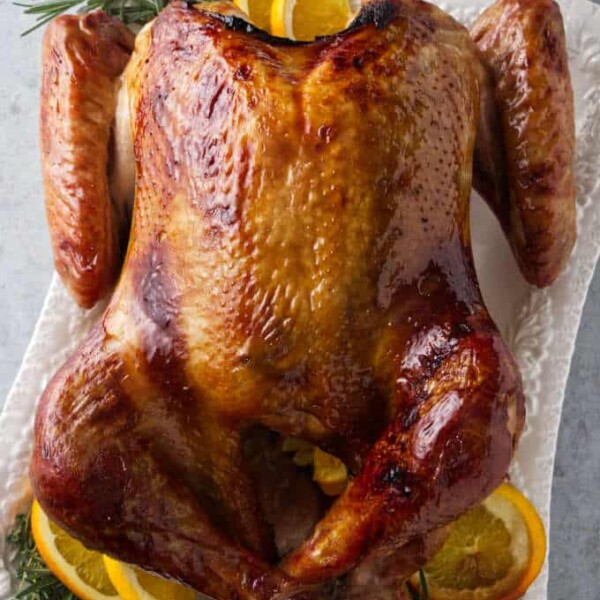
Traeger Smoked Spatchcock Turkey
Traeger Recipes
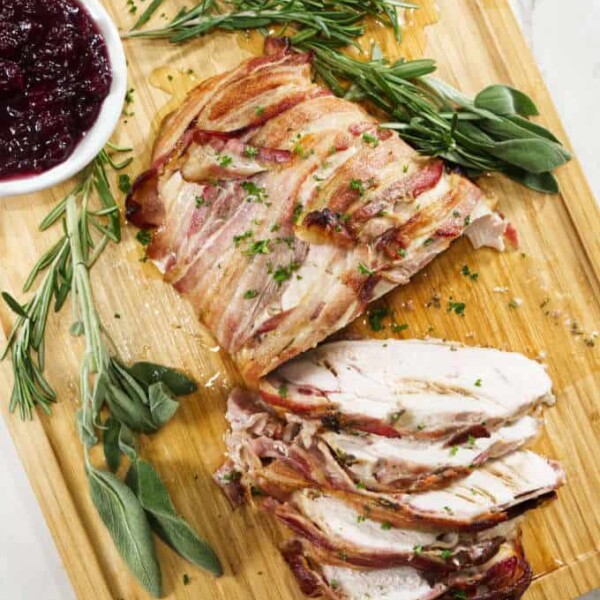
Traeger Smoked Turkey Breast (wrapped in bacon)
Grilling
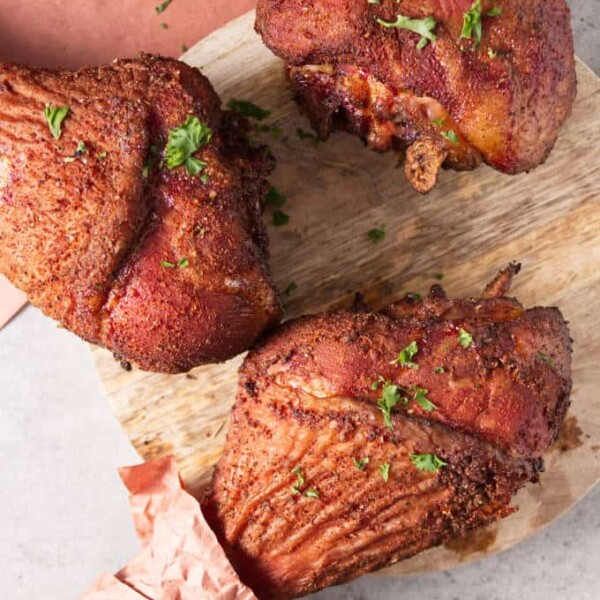
Disney Smoked Turkey Legs

Air Fryer Recipes
Air Fryer Turkey Wings
🔥 More Smoked Recipes

Traeger Recipes
Smoked Pork Butt (Smoked Pork Shoulder)

Traeger Recipes
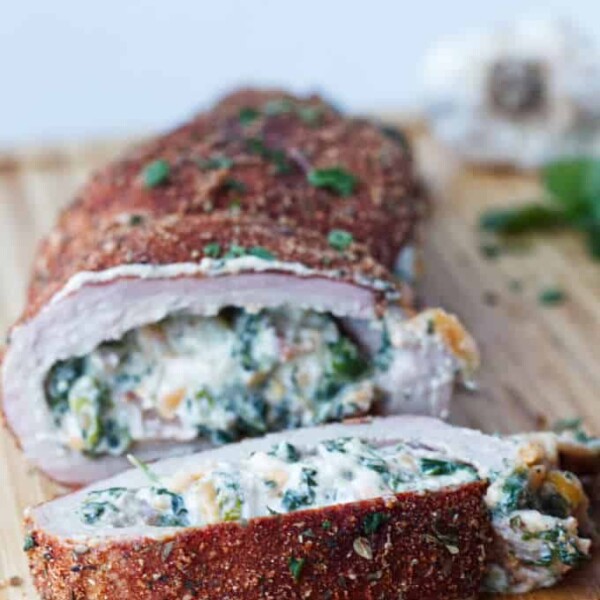
Smoked Pork Loin

Traeger Recipes
Traeger Prime Rib

Traeger Recipes
Smoked Brussels Sprouts
🎁 Now Go Fire up That Smoker
The pellet grill smoked turkey is a testament to culinary deliciousness, blending tradition and innovation. As the holiday season approaches, this recipe is one you will want to save. It is designed for all cooking levels and provides plenty of opportunity for customizing. While it boasts sophistication, its adaptability welcomes personal flair. Embrace the journey, add your touch, and elevate your celebration with this memorable dish!
💬 Tell Me What You Think!
Did you try out this recipe? Please leave a comment below and let me know how you liked it. Also, snap a picture and post it to your favorite social platform. Be sure to tag me at @alicensetogrill and let me know how you liked it!
CONNECT WITH A LICENSE TO GRILL!
Be sure to follow us on our social media accounts.
Did you make this recipe? Tell us about it in the comments below!

Pellet Grill Smoked Turkey
Equipment
Ingredients
- 1 whole turkey, 15 to 20 pounds
- ½ cup butter, softened
To Make the Brine
- 1 cup kosher salt, or 3/4 cup table salt
- ½ cup brown sugar
- 1 quart hot water
- 3 quarts cold water, or enough to cover the turkey
- 1 large onion, quartered
- 1 lemon, halved
- 6 garlic cloves
- fresh rosemary and sage, a few sprigs of each
Optional Aromatics for the Brine
- 3 tablespoons peppercorns
- sliced lemons, oranges, onions, and garlic
Instructions
Brine the Turkey
- Remove the giblet and gravy package from inside the cavity of the turkey. Remove or discard any plastic or metal cages or pop-up thermometers.
- Get a container that is large enough to hold the turkey and hold enough water to cover the turkey. Mix the salt, sugar, and hot water until dissolved. Add cold water or ice to cool the brine down.
- Place the turkey in the container and add the brining liquid. If you want to add additional aromatics like peppercorns, sliced onions, lemons, and bay leaves, do that as well.
- Top the container with the cold water. Make sure the turkey is completely submerged. Cover and refrigerate overnight.
Smoke the Turkey
- Set the smoker to 225°F and close the lid. Let the smoker pre-heat.
- Rinse the turkey and pat it dry. Place the turkey in a roasting pan and cover it with the softened butter. Lift the skin to form pockets. Make sure you get some of the butter underneath the skin.
- Stuff the cavity of the bird with onion, lemon, garlic cloves, and fresh herbs.
- When the pellet smoker is heated up, place it on the grill and stick a leave-in thermometer into the thickest part of the breast. Close the lid.
- Smoke the turkey until the breast reaches 110°F (this usually takes about 1 ½ to 3 hours, depending on the size of your bird). Increase the Traeger to 350°F. Begin checking several spots in the thickest part of the breast and the innermost thigh and wing with an instant-read thermometer, avoiding bone. Once the breast reaches 160°F, remove the turkey only if the thigh and wing have reached at least 165°F (about 2 ½ to 3 ½ hours for an 18 to 20 pound bird). See the Temperature Guide notes below.
- Remove the turkey from the Traeger and place it on a butcher board. Drape a sheet of aluminum foil over the turkey and allow it to rest for 15-20 minutes before carving. Leave a probe in the breast and monitor it during the rest, verifying that it reaches 165°F before carving. If the breast stops rising before reaching 165°F, promptly return the turkey to the heat and finish cooking.
Video
Notes
Temperature Guide
- USDA recommends cooking turkey to 165°F, checked in the thickest breast and innermost thigh and wing. For a juicy breast, I pull mine at 160°F only after the thigh and wing reach at least 165°F, then monitor the breast during the rest, verifying that it reaches 165°F before carving.
- Carryover cooking varies with the bird’s size and cooking method, so don’t assume a five-degree rise. If the breast stops rising below 165°F, promptly return it to the heat. If you prefer the straightforward USDA method, cook to 165°F before removing the turkey from the heat. Lower-temperature cooking can also be safe with a properly controlled time–temperature process; this recipe uses a verified 165°F final temperature instead.
- Start the turkey at 225°F for more smoke flavor. Once the breast reaches 110°F, turn the smoker up to 350°F to help crisp the skin.
- Use a trusty meat thermometer so you can monitor the cook and ensure the best results. I like to use the ThermoWorks Signals as a leave-in thermometer or an instant-read like the ThermoWorks ONE.
Water for Brine
- The hot water doesn’t need to be boiling hot. It just needs to be hot enough for the salt to dissolve more easily.
- If it takes more than 4 quarts of water to cover the turkey, then make more brine solution at a ratio of ¼ cup of kosher salt (or 3 tablespoons table salt) to 1 quart of water.
- Remember to wash your sink well after you rinse the brined turkey to avoid cross-contamination.
Brine Variations
Orange Brine with Herbs
For an aromatic and citrusy spin on the classic wet brined turkey, include the zest and juice of 4 oranges in the mixture or use part of a can of frozen concentrated orange juice. For added aromatics, toss in a handful of fresh rosemary, sage, and thyme sprigs to the brining liquid. Follow the rest of the original recipe, but make sure to also stuff the turkey cavity with some orange slices and herbs.Salt Kissed Honey and Garlic Turkey Brine
Add 1 cup of honey and 8-10 minced garlic cloves to the brine. This turkey has a sweet, garlicky note that pairs exceptionally well with smoky flavors. When you’re ready to smoke, rub a mixture of 2 tablespoons of honey, two tablespoons of brown sugar, one tablespoon of soy sauce, and some minced garlic under the turkey skin.BBQ Flavored Wet Brine
Incorporate 1 cup of your favorite BBQ sauce into the brine. When you are ready to smoke the turkey, rub it with a BBQ dry rub. As the turkey smokes, mop it every hour with a bit more BBQ sauce. 4.Nutrition
Nutrition information is automatically calculated, so should only be used as an approximation.



We have done turkeys before and find that the thighs cook slower than the breast, so when the breast hits 160, the thighs are about 10 degrees behind and NOT cooked. Any suggestions??
Thank you for such a detailed guide for brining and smoking turkey! Do you have a favorite wood or wood blend that you like to use?
Hey Jessica, thank you for the comment! I like to use a blend of maple, hickory, and cherry.