Pellet Grill Salmon

on Aug 26, 2026
This post may contain affiliate links. Please read our disclosure policy.
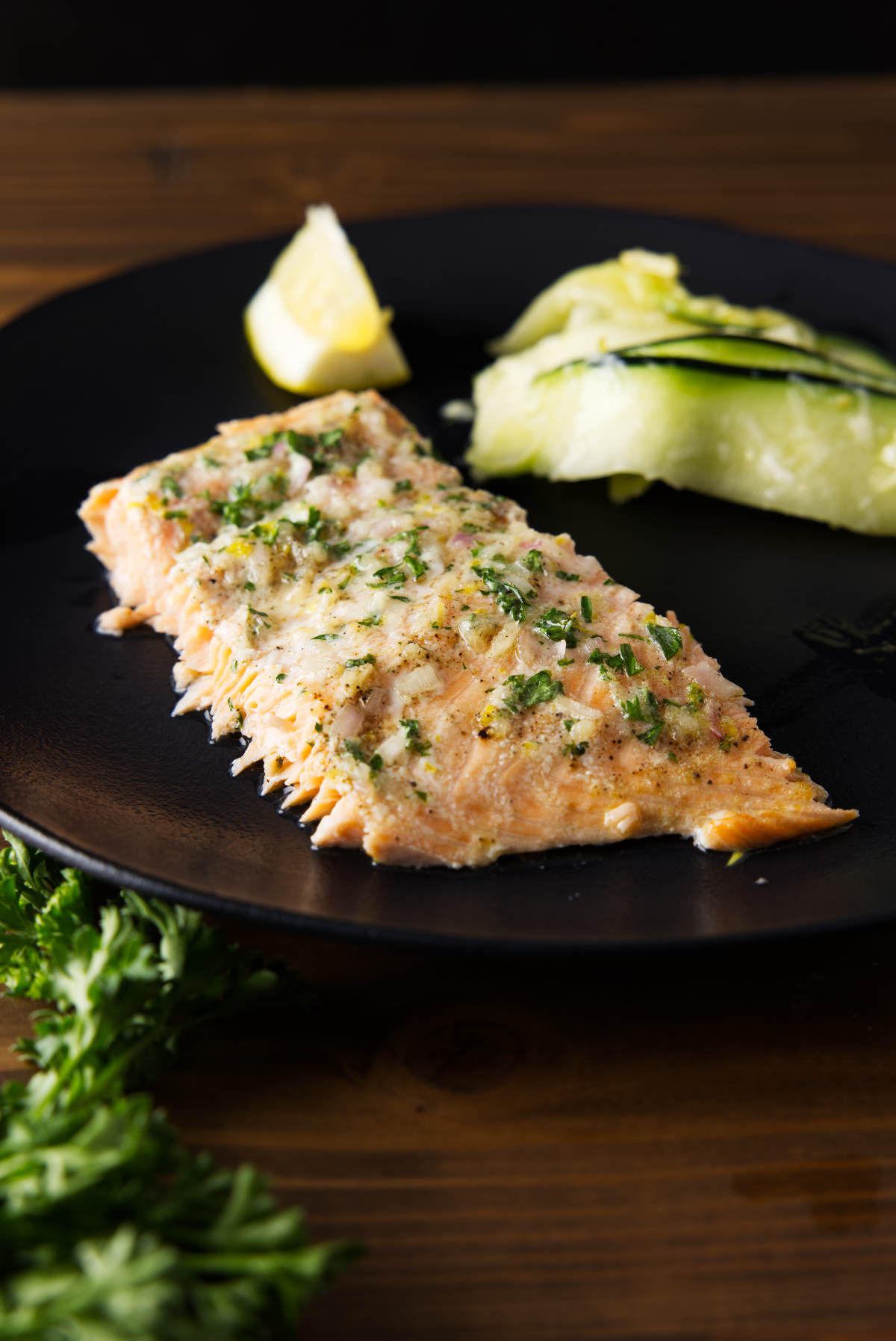
This Pellet Grill Salmon is buttery, flaky, and kissed with just enough Traeger wood-fired flavor to make a simple salmon dinner feel special. The fish cooks gently on the pellet grill while a lemon-garlic compound butter melts over the top and turns into a built-in sauce.
This is grilled salmon with a light smoke flavor. It works with a thick side of Atlantic salmon, steelhead, or another rich salmon fillet, and the whole cook stays simple enough for an easy yet delicious weeknight dinner. Or it can stand up on its own for a backyard BBQ get-together.
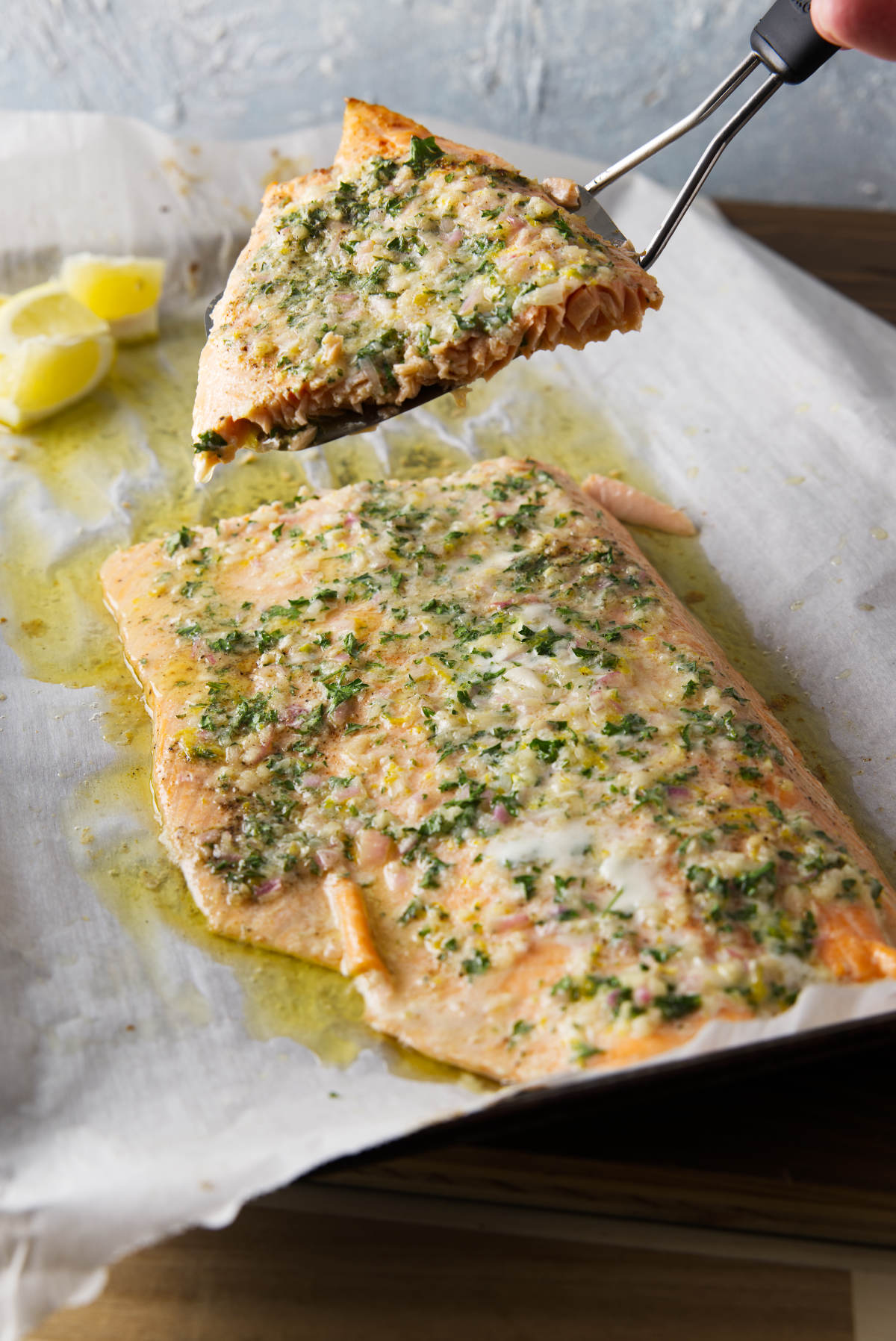
Table of Contents
- Why This Pellet Grill Salmon Works
- Pro Tips for the Best Pellet Grill Salmon
- Ingredients That Matter
- Types of Salmon
- Grilling Salmon With or Without Skin
- How to Tell When Salmon Is Done
- Substitutions and Variations
- Storage and Reheating
- Frequently Asked Questions
- Fresh Catch Seafood Recipes
- CONNECT WITH A LICENSE TO GRILL!
- Pellet Grill Salmon Recipe
Why This Pellet Grill Salmon Works
Salmon has enough natural fat to handle a pellet grill without drying out when you keep the cook controlled. The butter melts slowly over the top, the lemon keeps it bright, and the mild smoke gives the fish a backyard-grilled flavor without covering up the salmon.
The biggest choice is how you support the fish on the grill. Skin-on salmon is the easiest because the skin protects the bottom of the fillet. Skinless salmon or steelhead can still work beautifully, but it needs parchment underneath so the fish can cook without sticking to the grates.
Pro Tips for the Best Pellet Grill Salmon
Use the skin as a shield. Skin-on salmon can go directly on clean, oiled grill grates because the skin protects the bottom of the fish and makes the fillet easier to move.
Use parchment for skinless fillets. If the salmon is skinless, set it on parchment paper and place the parchment directly on the grill grates so the fish does not stick or break apart.
Grill at 350°F. This temperature is hot enough to cook the salmon like grilled fish and melt the compound butter, but gentle enough to keep the center moist.
Pull it at 120°F to 125°F. Check the thickest part with an instant-read thermometer, then let the salmon rest for 5 minutes before serving.
Ingredients That Matter
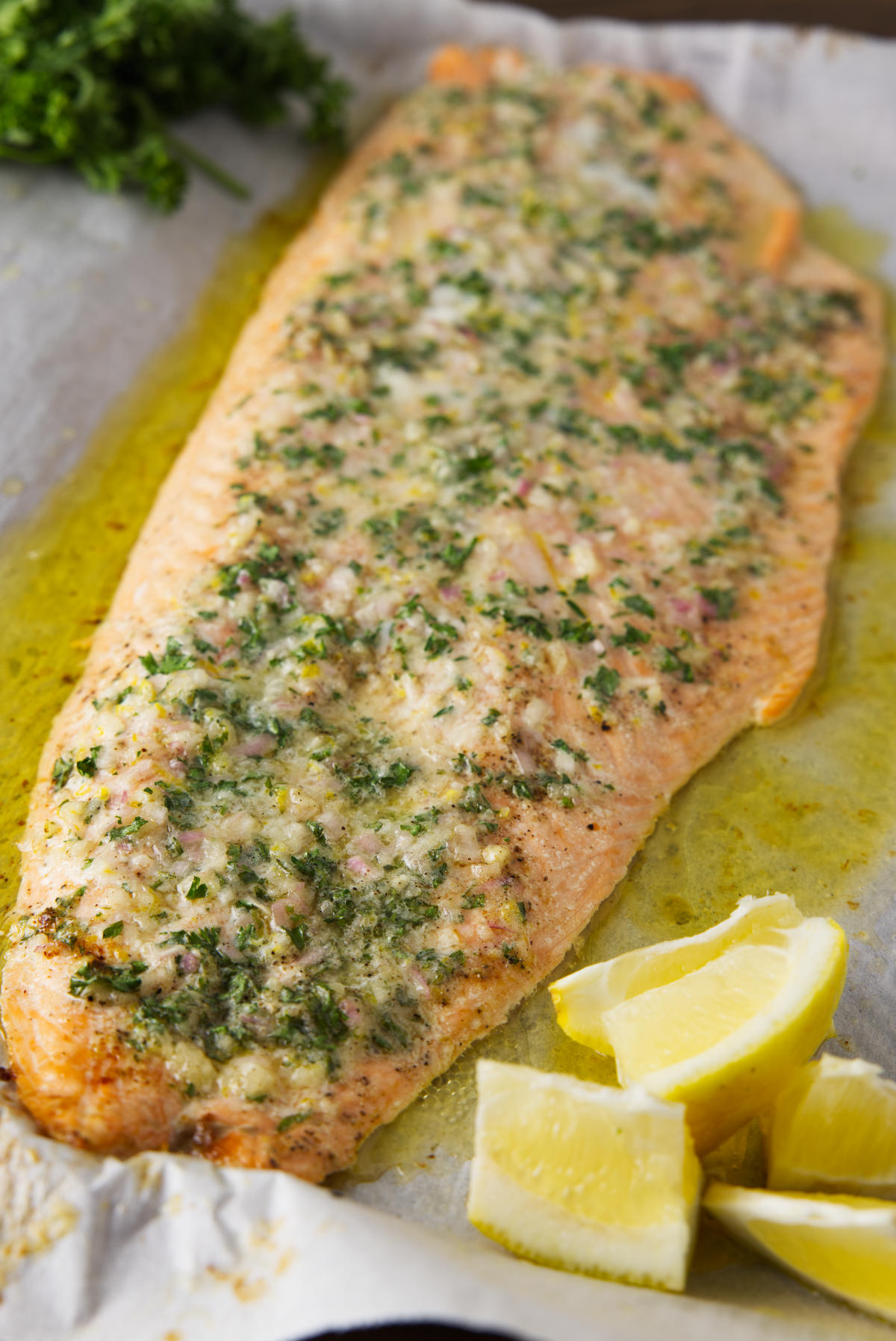
Choose salmon with good thickness. A center-cut side of salmon or steelhead cooks more evenly than a thin tail piece. Atlantic salmon is usually rich and forgiving, while steelhead has a clean flavor and a slightly leaner texture and is more prone to drying out when cooking.
Skin-on fish is the most grill-friendly. If your fillet has skin, place it directly on the grill grates skin-side down and let it cook without flipping. If the fish is skinless, place it on parchment paper first, then set the parchment on the grill grates.
Softened butter stays where you put it. Melted butter will run off before the salmon starts cooking, but softened butter spreads over the top and slowly melts into the fish as it grills.
Lemon keeps the butter bright. Lemon zest gives the butter the strongest citrus flavor, while a little lemon juice cuts through the richness right at the end.
Fresh herbs make the finish lighter. Dill is classic with salmon, while parsley keeps the butter fresh without fighting the smoke, garlic, or lemon flavors.
Types of Salmon
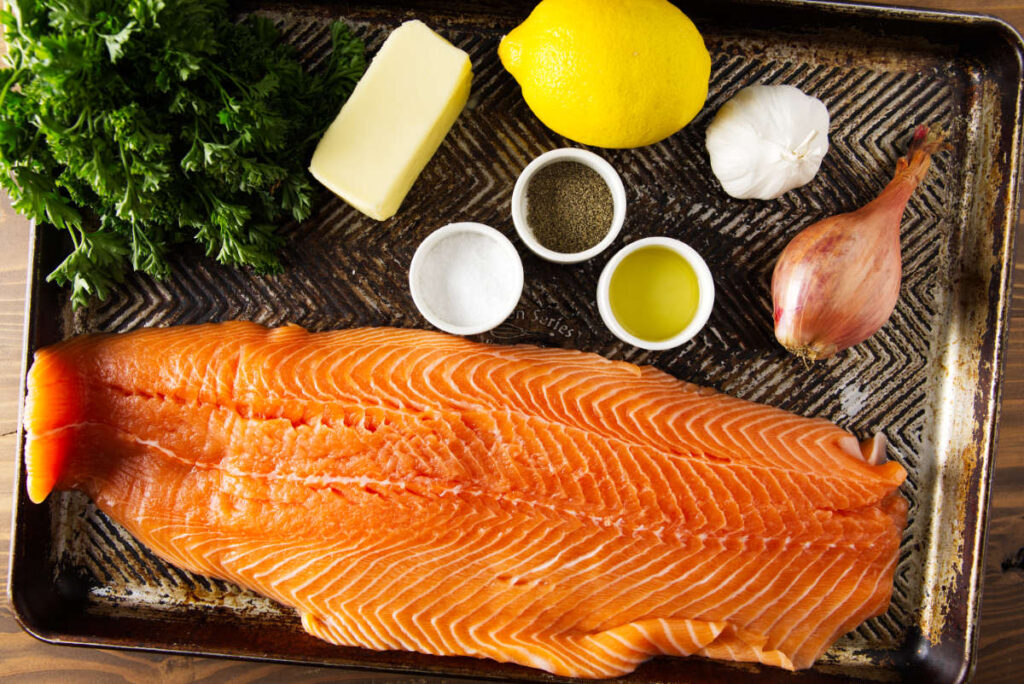
I tested this recipe with both steelhead and Atlantic salmon, and both worked well. Atlantic salmon is usually fattier, milder, and very forgiving on the grill, which makes it a great choice if you want buttery flakes and a little extra cushion against overcooking.
Steelhead is technically trout, but it cooks a lot like salmon and fits this recipe nicely. It is often a little leaner than Atlantic salmon, so keep a closer eye on the internal temperature and pull it as soon as the thickest part reaches 120°F to 125°F.
Wild salmon varieties like sockeye or coho can also work, but they are usually leaner and thinner. Check them early because they can go from moist to dry faster than a thick farm-raised Atlantic fillet.
Grilling Salmon With or Without Skin
For skin-on salmon, oil the top of the fish, season it, add the compound butter, and place it directly on clean grill grates with the skin side down. The skin becomes a protective layer between the fish and the heat, so you can cook the salmon without flipping it.
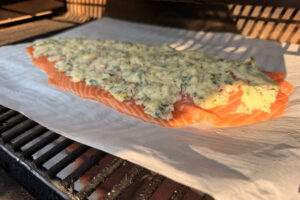
For skinless salmon or steelhead, place the fish on parchment paper first, then put the parchment directly on the grill grates. The parchment gives the delicate fish enough support to cook cleanly and lift off the grill in one piece.
How to Tell When Salmon Is Done
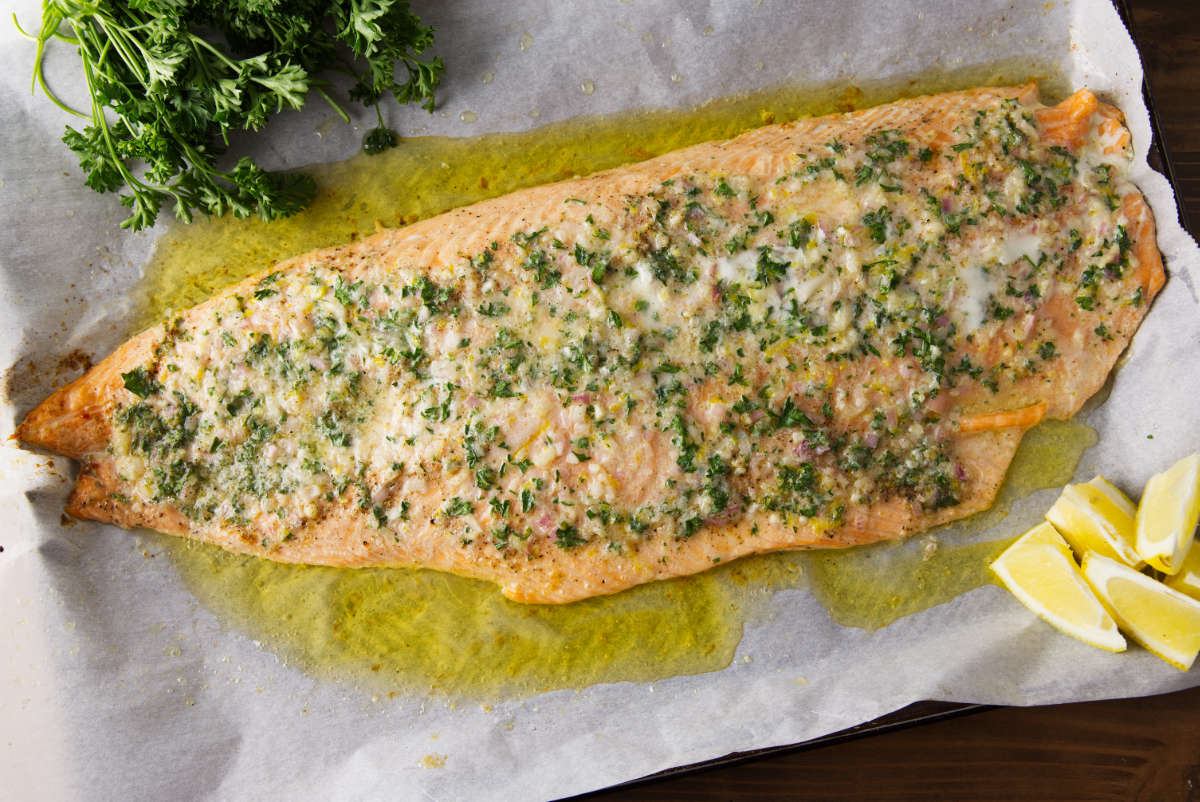
Use an instant-read thermometer and check the thickest part of the fillet. For this recipe, pull the salmon at 120°F to 125°F for moist, medium salmon. If you prefer salmon fully cooked through, USDA recommends cooking fish to 145°F, but I consider this much too overdone.
The salmon should flake when pressed gently, but it should still look moist. If white albumin starts pushing out aggressively across the surface, the fish is getting hot quickly, so start checking the internal temperature.
Substitutions and Variations
You can change the herbs in the compound butter depending on what you have. Parsley keeps it simple, but chives, basil, tarragon, or a little thyme all work well. For more heat, add a pinch of red pepper flakes or a little Cajun seasoning to the butter.
For the pellet grill smoker, use alder, apple, cherry, pecan, or maple pellets in the Traeger. These are all good choices for salmon. Hickory can work if you want a stronger smoke flavor, but it can take over quickly, so I would blend it with a milder pellet instead of using it straight.
Storage and Reheating
Store leftover pellet grill salmon in an airtight container in the refrigerator for up to 3 days. It is great cold over salads, tucked into wraps, flaked into rice bowls, or served with eggs the next morning.
To reheat, use gentle heat so the salmon does not dry out. Warm it covered in a low oven, or reheat small portions in short microwave bursts at reduced power. Add a little extra butter or lemon before serving if the fish needs a refresh.
Frequently Asked Questions
Cook this pellet grill salmon at 350°F. That temperature gives you a grilled salmon texture with light smoke flavor and enough heat to melt the compound butter over the top.
Pull the salmon at 120°F to 125°F for moist, medium-rare salmon. USDA recommends cooking fish to 145°F, so cook it longer if you prefer salmon fully cooked through.
No. Cook the salmon skin-side down the entire time. The skin protects the fish from the grill grates and helps keep the fillet together.
Alder, apple, cherry, pecan, and maple are all good choices for salmon. They give the fish a gentle smoke flavor without overpowering the compound butter.
Yes. Individual fillet portions work well, but they usually cook faster than a whole side of salmon. Start checking the internal temperature early, so they do not overcook.
Fresh Catch Seafood Recipes
Main Dish
How to Grill a Whole Salmon
Air Fryer
Air Fryer Salmon Patties
Seafood
Grilled Tequila Lime Shrimp
CONNECT WITH A LICENSE TO GRILL!
Be sure to follow us on our social media accounts.
Did you make this recipe? Tell us about it in the comments below!
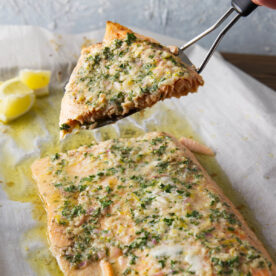
Pellet Grill Salmon
Ingredients
- 3 ½ pound salmon, skin on, pin bones removed, one fillet
- 1 tbsp olive oil
- ½ tsp kosher salt
- ¼ tsp black pepper
- ½ cup salted butter, softened
- 2 cloves garlic, minced
- 1 tbsp fresh dill, chopped
- 1 tbsp fresh parsley, chopped
- 1 tsp lemon zest
- 1 tsp lemon juice
- ¼ tsp kosher salt
- 1 lemon, cut into wedges for serving
Instructions
- Preheat the pellet grill to 350°F using a mild pellet.
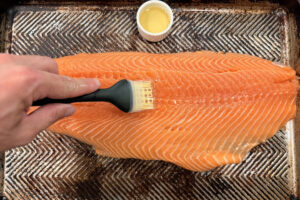
- Pat the salmon dry with paper towels and check for and remove pin bones. Place it skin-side down on a sheet pan, or if it is skinless, place it on a parchment-lined sheet pan. Brush salmon with olive oil.

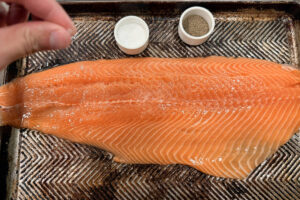
- Season it evenly with kosher salt and black pepper.
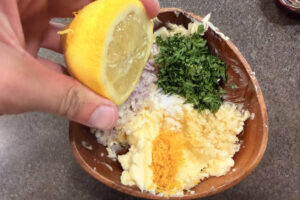
- Stir the softened butter, garlic, dill, parsley, lemon zest, lemon juice, and kosher salt together until evenly combined.
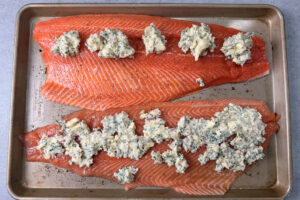
- Place dollops of the compound butter over the salmon fillet.
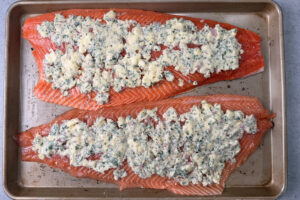
- Spread the compound butter over the top of the salmon in an even layer.
- Place the salmon skin-side down on the pellet grill. If you are using parchment paper, place the parchment paper directly on the grill grates. Close the lid and cook without flipping until the thickest part reaches 120°F to 125°F internal temperature, about 18 to 25 minutes depending on thickness.
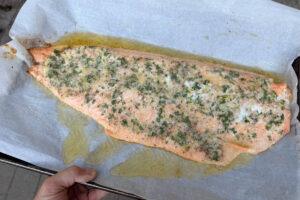
- Remove the salmon from the grill and rest for 5 minutes. Serve with lemon wedges.
Notes
Skin-On Or Skinless Salmon
Skin-on salmon is easiest on the grill. Place it directly on clean, oiled grill grates with the skin side down. The skin protects the fish and helps the fillet hold together. Skinless salmon needs support. Place skinless salmon or steelhead on parchment paper, then set the parchment directly on the grill grates. Trim away excess parchment so it does not hang over the heat.Doneness
Pull the salmon at 120°F to 125°F. That gives you moist, medium-rare salmon with tender flakes. The temperature will rise slightly as the fish rests. Cook longer if you prefer it fully done. USDA recommends cooking fish to 145°F, so use that temperature if you want the salmon cooked all the way through.Compound Butter
Use softened butter, not melted butter. Softened butter spreads over the salmon and melts slowly as the fish cooks instead of running off right away. Spoon the melted butter back over the fish. Some butter may collect around the salmon after grilling, and it makes a quick sauce for serving.Pellets
Use a mild wood. Alder, apple, cherry, pecan, and maple all work well with salmon. Hickory can work, but use it lightly so it does not overpower the fish.Leftovers
Reheat gently. Store leftovers in the refrigerator for up to 3 days and warm them slowly so the salmon stays moist. Cold leftovers are also great over salads, rice bowls, wraps, or eggs.Nutrition
Nutrition information is automatically calculated, so should only be used as an approximation.