Blue Cheese Bacon Venison Snack Sticks

on Aug 04, 2026, Updated Nov 01, 2026
This post may contain affiliate links. Please read our disclosure policy.
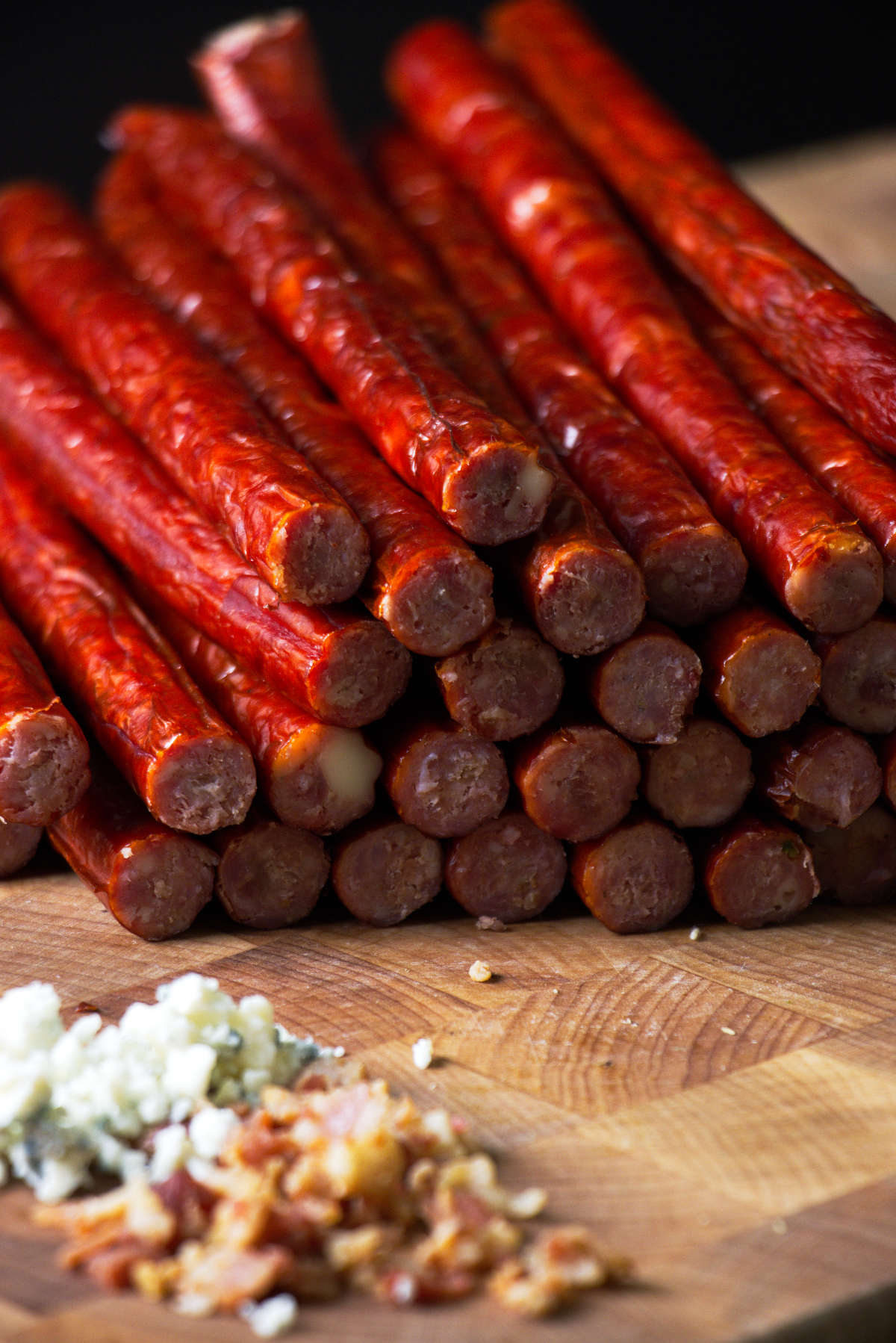
These Blue Cheese Bacon Venison Snack Sticks are smoky, rich, and packed with the kind of bold flavor that will make you want to go back to the fridge for more! This batch blends venison with pork and pork back fat, then folds in bacon bits and cold gorgonzola for a savory, tangy bite that makes these snack sticks unlike any you have had before!
This is a 5-pound batch, so it is easy to manage, but it still gives you enough snack sticks to stock up before a hunting trip or a large gathering.
Why These Smoked Snack Sticks Work
Blue cheese and bacon can take over the flavor if the balance is off, but this recipe is balanced. The gorgonzola adds that sharp, tangy blue cheese bite without overwhelming the sticks, while the bacon brings that salty, smoky goodness.
The venison gives the sticks their lean wild-game character, and the pork back fat keeps them from drying out. Fermento adds the familiar tang of a snack stick, and milk powder helps the mixture bind so the finished texture is firm.
Pro Tips for the Best Blue Cheese Bacon Snack Sticks
Keep everything cold: Keep the meat, fat, bacon, cheese, grinder parts, and mixing bowls cold from start to finish. Cold fat grinds cleaner, cold gorgonzola folds in better, and a chilled meat mixture is less likely to smear while you are stuffing the casings.
Make sure it is tacky: Mix the meat with the cure, binder, water, and seasonings until it turns sticky and tacky before you fold in the bacon and gorgonzola. That tacky texture is what helps the snack sticks bind. Once the bacon and cheese go in, mix just enough to distribute them so the cheese stays in small pockets instead of disappearing into the meat.
Cook according to internal temp: Dry the casings uncovered in the refrigerator, then smoke at a steady 180°F on a Grilla Mammoth or another pellet smoker that supports that setting. Monitor from the start and cook to 160°F internally. Check several sticks, avoiding cheese pockets. For the lower-temperature electric-smoker method, see the recipe notes.
Chill and bloom: Transfer the cooked sticks promptly to a clean ice-water bath to stop the cooking. Keep the water cold by adding ice as needed, then drain and pat the sticks dry. Arrange the sticks on clean racks over trays and refrigerate promptly at 40°F or below to dry the casings and chill completely. Let them rest in the refrigerator for 12 to 24 hours for the flavor and texture to settle, then slice and vacuum seal while cold. Skip a prolonged room-temperature bloom.
Choose your cheese: Keep the gorgonzola very cold and fold it in gently after the meat becomes tacky. Gorgonzola is not high-temperature cheese and will soften into the sticks during smoking. Avoid promising intact cheese pockets, and try a smaller batch when using a new smoker.
Substitutions and Variations
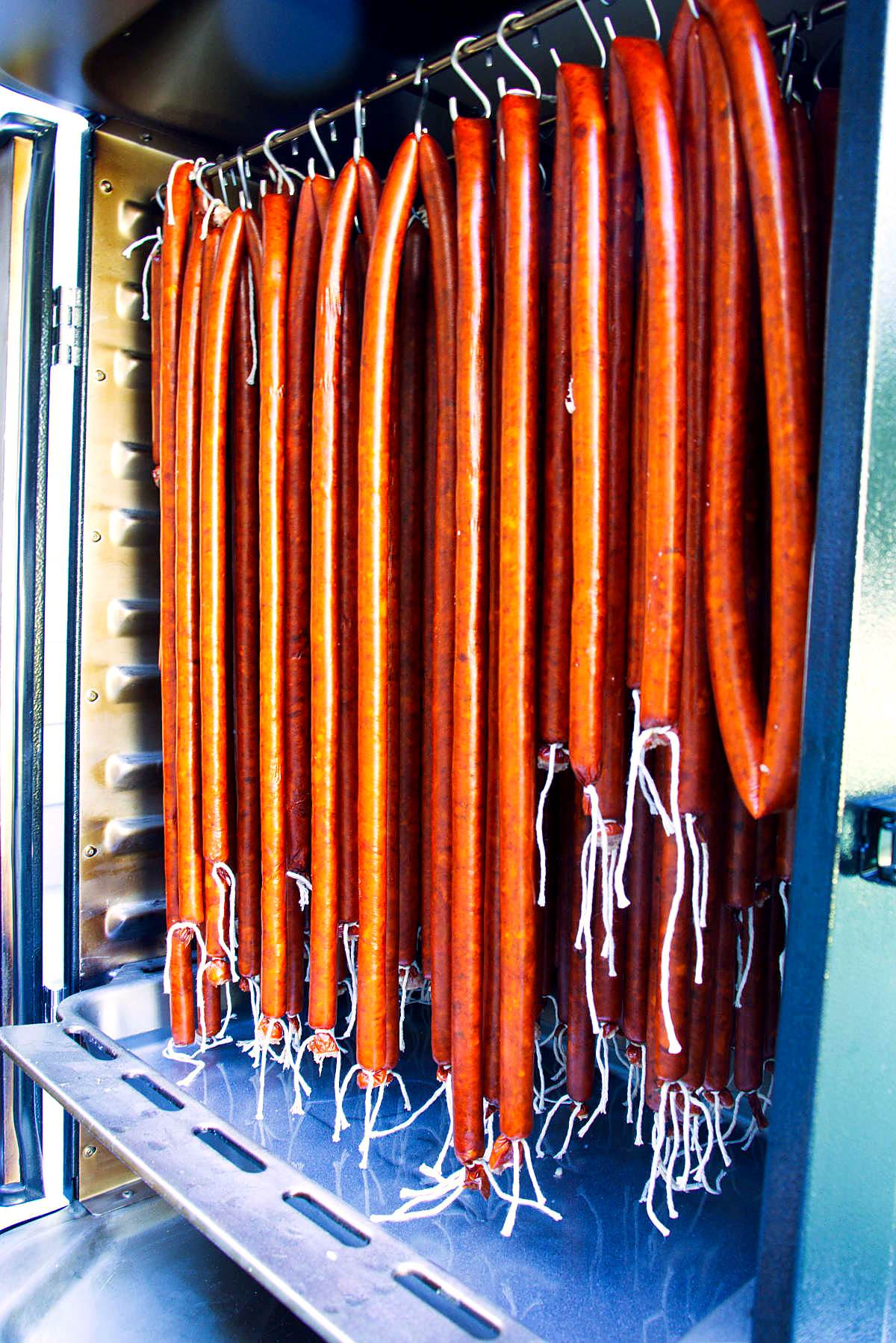
Cheese: Gorgonzola gives this recipe a bold blue cheese flavor, but you can use a milder blue cheese if you want the bacon and smoke to lead. You can also use other high-temp cheeses like cheddar, pepper jack, or Swiss. For this recipe, I found the ratio of roughly ¾ to 1 ounce of blue cheese per pound of meat is ideal. Otherwise, increasing the amount of cheese may overpower the flavor of the snack stick or change the texture too much.
Bacon: Cooked bacon bits work best because they bring concentrated bacon flavor without adding too much raw fat to the meat mixture. Use bacon that has been cooked, drained, cooled, and chilled before mixing. If you use larger chopped bacon pieces, keep them small enough to pass cleanly through the stuffer and casing.
Casings: You can make these in slightly larger snack-stick casings, but the cook time may change. You can use 19mm or 21mm casings as well.
Check out our other recipe for smoked jalapeño cheddar venison snack sticks for a change-up that brings bold flavors and a punch of heat.
Ingredients
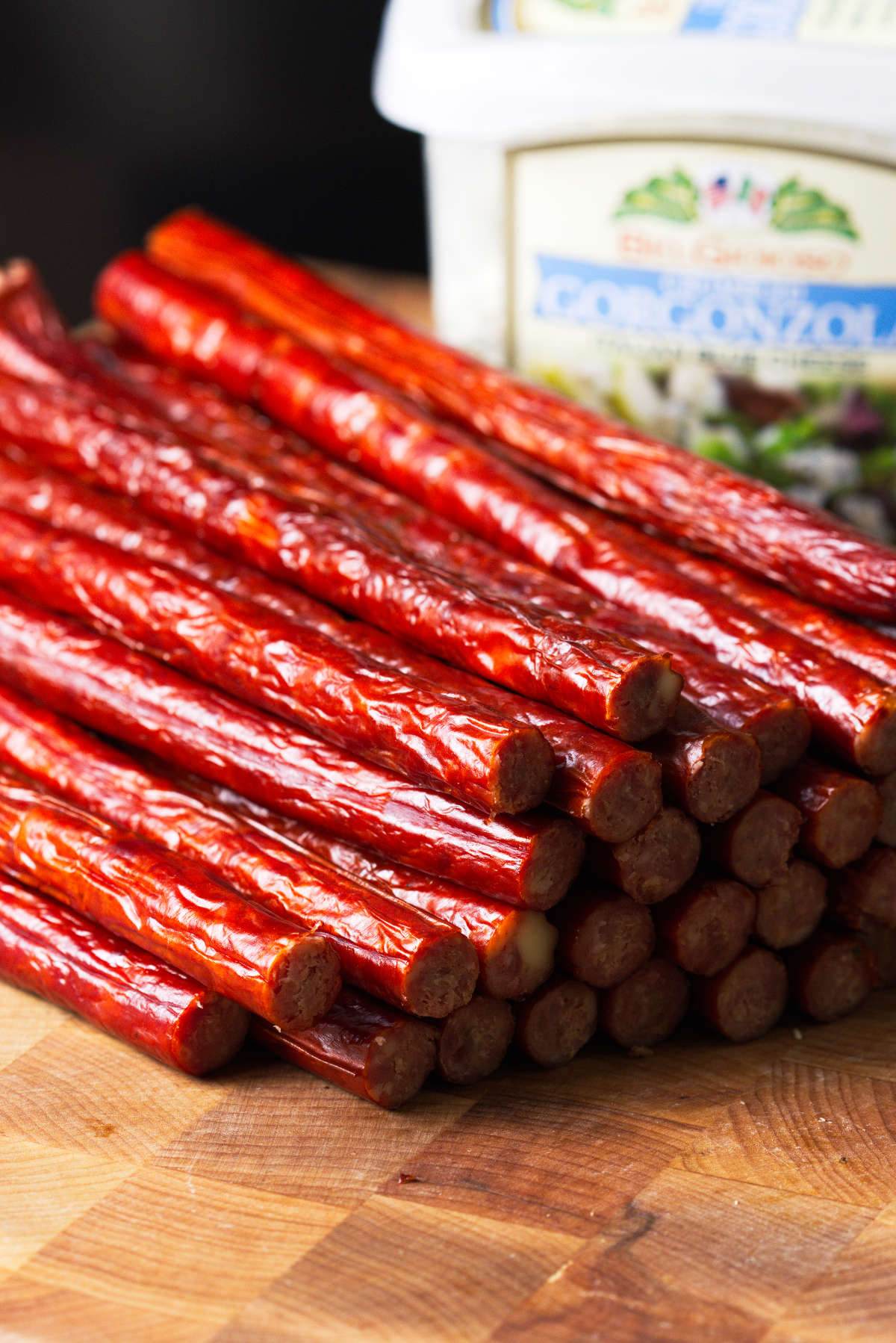
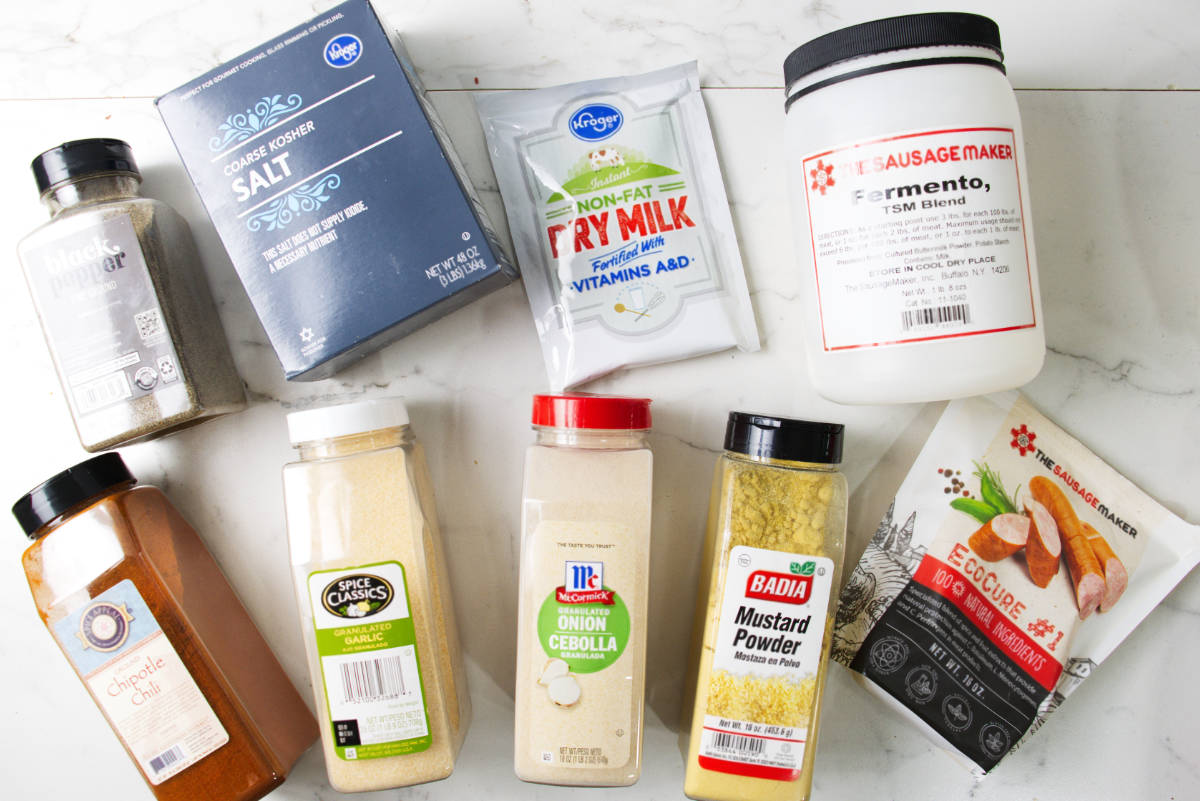
This recipe uses a balanced meat block with venison, pork, and pork back fat. The cure, Fermento, nonfat dry milk powder, salt, and seasonings should be measured carefully because they affect flavor, texture, and how the snack sticks bind.
The bacon and gorgonzola are the ingredients that make this batch stand out. Keep both well chilled before mixing. The bacon adds smoky, salty flavor, while the gorgonzola melts into small tangy pockets throughout the sticks.
Storing and Serving Suggestions
Let the snack sticks cool completely and store them in the fridge for 1 day before packaging. This lets the flavor develop and the moisture settle.
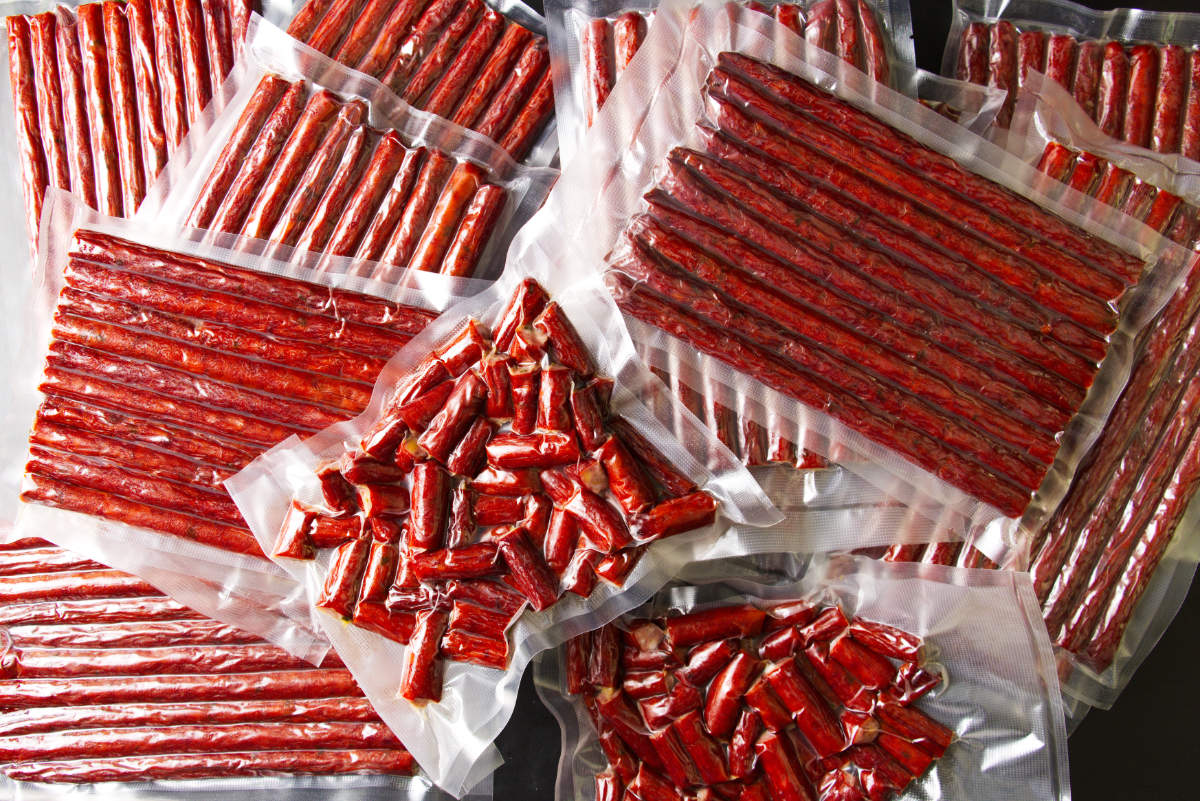
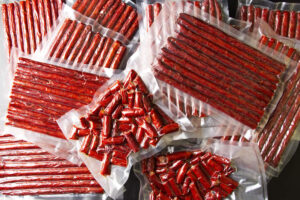
Vacuum pack the snack sticks when they are cold so that steam does not get trapped in the bag. Once they are fully chilled, divide them into smaller portions based on how quickly you plan to eat them and seal them up.
Fridge: If they are not vacuum sealed, store the snack sticks in an airtight container or Ziploc bag in the refrigerator for about 1 week. Vacuum-sealed packs can usually be refrigerated for about 2 to 3 weeks.
Freezer: For longer storage, freeze tightly wrapped snack sticks for about 2 to 3 months, or freeze vacuum-sealed packs for about 6 months. Once a vacuum-sealed pack is opened, treat it like regular refrigerated snack sticks and eat them within about 1 week.
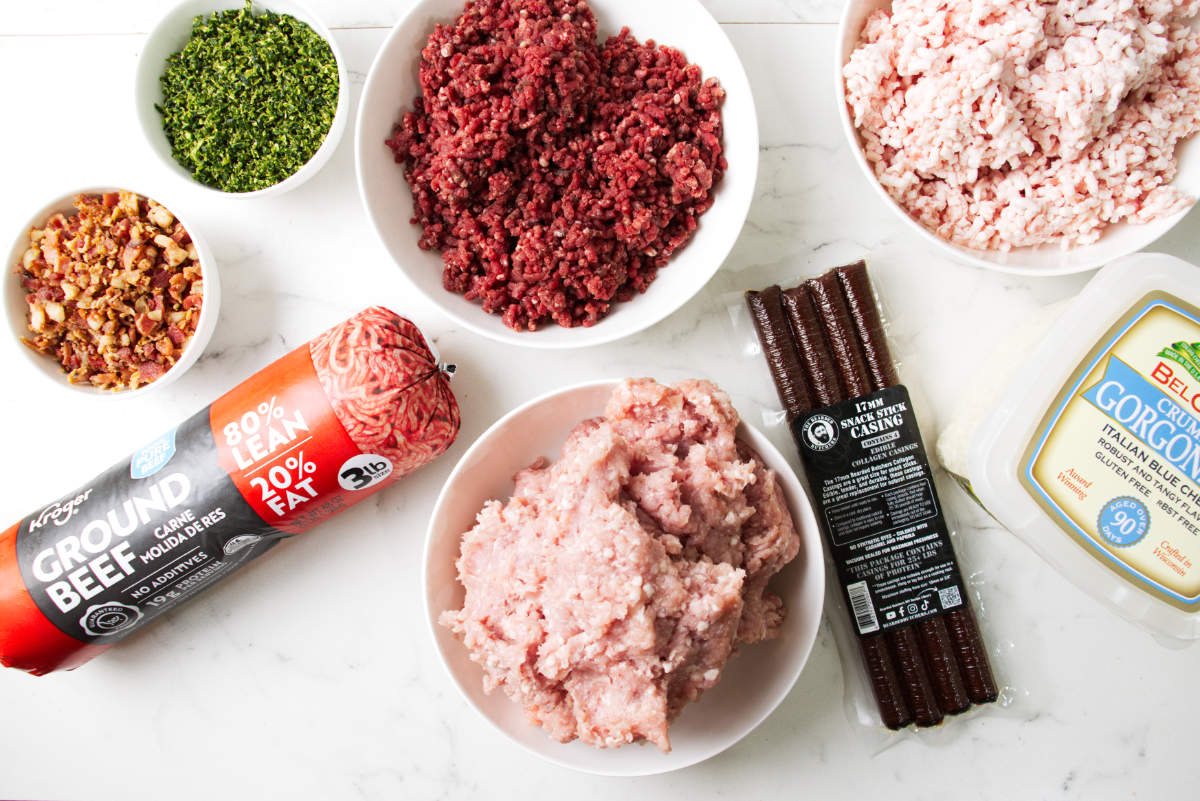
These are great cold from the fridge, sliced onto a snack board, packed for hunting trips, or served with crackers, pickles, and sharp cheese.
Frequently Asked Questions
Yes. Blue cheese works well in venison snack sticks. Be sure it is kept very cold and folded in after the meat mixture has already become tacky.
Collagen casings are the easiest choice for homemade snack sticks because they are uniform, easy to stuff, and do not need soaking. This recipe uses 17mm collagen snack stick casings, but you can use 19mm or 21mm casings as well.
Yes. Use cooked bacon bits that have been drained and chilled before mixing. Raw bacon can release too much fat during the smoke and make the texture harder to control.
Cook the snack sticks to 160°F internally, checking the meat rather than a cheese pocket. The main method uses a steady 180°F pellet smoker. For an electric smoker capable of 120°F, follow the gradual temperature increases in the recipe notes. Follow any higher final temperature required by your curing-product manufacturer.
An ice bath helps stop the cooking quickly. After the ice bath, pat the sticks dry and refrigerate promptly on clean racks. Chill completely before slicing and packaging.
Yes. Cool them completely, vacuum seal them tightly, and freeze them in smaller packs so you can thaw small batches.
CONNECT WITH A LICENSE TO GRILL!
Be sure to follow us on our social media accounts.
Did you make this recipe? Tell us about it in the comments below!
Blue Cheese Bacon Venison Snack Sticks
Ingredients
- 2 lb venison, well chilled
- 1¾ lb pork, well chilled
- 1¼ lb pork back fat, well chilled or partially frozen
- ⅞ oz Eco Cure #1, use the amount listed for your favorite cure product
- 2½ oz Fermento
- 1 oz nonfat milk powder
- ⅔ cup ice cold water
- 1⅓ oz kosher salt, about 8 tsp Morton kosher salt or 13 tsp Diamond Crystal
- 2 tsp black pepper
- 2½ tsp garlic powder
- 1 tsp onion powder
- 2 tsp chipotle powder
- 4½ tsp spicy pepper flakes
- 1 tsp mustard powder
- 1¼ tsp granulated sugar
- 4 oz bacon bits, cooked, drained, and well chilled
- 4 oz gorgonzola, crumbled and very cold
- 1 full collagen casing, 17mm; have extra casing ready just in case
Instructions
- If you are grinding your own meat, keep the venison, pork, pork back fat, grinder parts, and mixing bowl very cold before starting. Freeze the meat for about an hour before grinding.
- Grind the chilled venison, pork, and pork back fat through a coarse plate for the first grind, then grind again through a fine plate. Keep the meat cold between grinds so the fat stays firm.
- Combine the Eco Cure #1, Fermento, nonfat milk powder, salt, and seasonings. Sprinkle the mixture over the ground meat, then add the ice cold water.

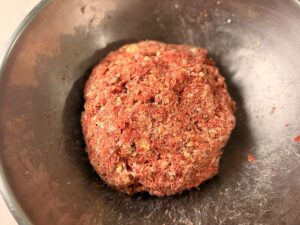
- Mix until the meat becomes tacky and well bound. The mixture should feel sticky before you add the bacon and cheese.
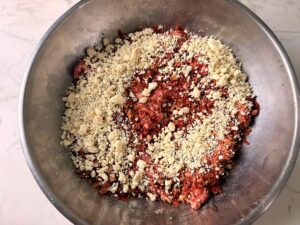
- Fold in the chilled bacon bits and very cold gorgonzola just until evenly distributed. Do not overmix, or the gorgonzola can smear into the meat instead of staying in small pockets.
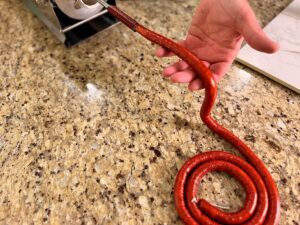
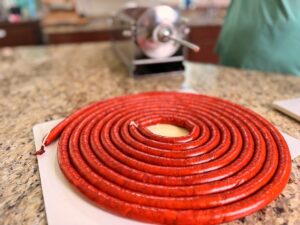
- Stuff the mixture into 17mm collagen snack stick casings, taking care not to overstuff or leave large air pockets.
- Arrange the stuffed sticks on clean wire racks over trays, leaving space between them. Pat away surface moisture and refrigerate uncovered at 40°F or below until the casings feel dry to the touch. Keep them refrigerated while you preheat a Grilla Mammoth or another pellet smoker capable of holding 180°F, such as a compatible Traeger model, to 180°F. For an electric smoker capable of lower temperatures, see the Electric Smoker Method in the notes.
Smoke the Snack Sticks on a Pellet Smoker
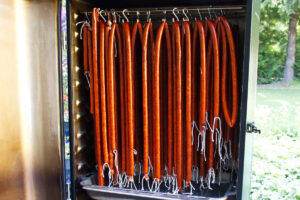
- Hang the sticks with space between them in a vertical smoker, or arrange them in a single layer on the racks of a pellet grill. Keep them away from direct heat and do not let them touch. Maintain 180°F throughout the cook and monitor the actual cabinet temperature with a separate thermometer near the sticks.

- Cook until the center of the snack sticks reaches 160°F. Use a thin probe inserted lengthwise into the meat, avoiding cheese pockets, and monitor from the start of the cook. Check several sticks in different parts of the smoker with an instant-read thermometer and remove each as it reaches 160°F. Do not raise the heat to rush the finish. Cooking time varies with casing size, batch size, and smoker performance.
- Transfer the cooked sticks promptly to a clean ice-water bath to stop the cooking. Keep the water cold by adding ice as needed, then drain and pat the sticks dry.
- Drain and pat the sticks dry, then arrange them on clean racks over trays and refrigerate promptly at 40°F or below. Let the casings dry in the refrigerator instead of using a prolonged room-temperature bloom.
- Arrange the sticks on clean racks over trays and refrigerate promptly at 40°F or below to dry the casings and chill completely. Let them rest in the refrigerator for 12 to 24 hours for the flavor and texture to settle, then slice and vacuum seal while cold. Skip a prolonged room-temperature bloom.
Notes
Pellet Smoker Method
Steady heat: The main instructions use 180°F for a Grilla Mammoth or another pellet smoker that can maintain that setting. Dry the casings in the refrigerator before smoking. Use indirect heat, leave space between sticks, and monitor the actual temperature near the meat. Avoid temperature spikes, which can encourage fat and cheese loss.Electric Smoker Method
Use suitable equipment: This alternate method requires an electric smoker that can maintain 120°F and the higher settings below. Keep the sticks refrigerated while it preheats. Follow the directions for your specific curing product, including any required refrigerated rest before smoking. Different cures are not interchangeable by weight. Dry at 120°F: Load the sticks with space between them and hold at 120°F for 1 hour without added smoke, with the vent open according to your smoker instructions. Increase in stages: Add smoke and raise the cabinet temperature to 140°F for 1 hour, then 150°F for 1 hour, then 160°F for 1 hour. Finally, raise it to 170°F and continue until the sticks reach 160°F internally. Monitor internal temperature from the beginning and remove any sticks that reach 160°F sooner. The final stage has no fixed time. Finish and chill: Follow the same ice bath and refrigerated chilling steps in the main instructions. If the curing-product manufacturer requires a higher final internal temperature, follow that requirement.For the Meat
This version uses venison, pork, and pork back fat. The pork rounds out the lean venison, and the back fat helps keep the snack sticks juicy through the smoke. If you grind your own meat, keep everything cold. Chill the meat, fat, grinder parts, and mixing tub before you start, and put the meat back in the freezer for a short rest if it starts to soften.Bacon and Gorgonzola
Use cooked bacon bits that are drained and well chilled before mixing. Warm bacon fat can smear into the meat and make the texture greasy. Keep the gorgonzola very cold and fold it in gently after the meat mixture is tacky. The cheese will soften during smoking, adding tangy flavor throughout the sticks.For the Casings
This recipe uses 17mm collagen casings. Collagen casings do not need to be soaked, and they give the sticks a slim, classic snack-stick shape. You can use 19mm or 21mm casings as well, and they will be easier to fill with the chunky add-ins. Do not overstuff the casings. If they are packed too tightly, they are more likely to split while loading, hanging, or smoking.Mixing
Mix the meat, water, cure, binder, and seasonings until the meat becomes tacky. That sticky texture helps the snack sticks bind so they are firm instead of crumbly.Cooling and Chilling
Transfer the cooked sticks promptly to a clean ice-water bath to stop the cooking. Keep the water cold by adding ice as needed, then drain and pat the sticks dry. Arrange the sticks on clean racks over trays and refrigerate promptly at 40°F or below to dry the casings and chill completely. Let them rest in the refrigerator for 12 to 24 hours for the flavor and texture to settle, then slice and vacuum seal while cold. Skip a prolonged room-temperature bloom.Timing and Temperature
Use a thermometer: Monitor from the start rather than waiting several hours to check. Probe the meat, avoiding cheese pockets, and verify several sticks in different smoker positions. There is no fixed cook-time estimate for this pellet-smoker adaptation yet. Plan for a variable cook and use 160°F internally as the endpoint, or a higher temperature if required by your curing-product manufacturer.Cheese on a Pellet Smoker
Cheese choice: Keep the gorgonzola very cold and fold it in gently after the meat becomes tacky. Gorgonzola is not high-temperature cheese and will soften into the sticks during smoking. Avoid promising intact cheese pockets, and try a smaller batch when using a new smoker.Nutrition
Nutrition information is automatically calculated, so should only be used as an approximation.