Smoked Chicken Drumsticks

on Jul 23, 2026
This post may contain affiliate links. Please read our disclosure policy.
Chicken drumsticks are one of the easiest cuts of chicken to smoke. They’re inexpensive, hard to overcook, and the dark meat stays juicy while picking up plenty of smoky flavor.
This recipe starts the drumsticks low and slow so they have time to absorb the smoke, then finishes them over higher heat to help the skin crisp and the BBQ sauce become thick and sticky. The result is tender, flavorful chicken with a rich smoky flavor and skin that isn’t rubbery.
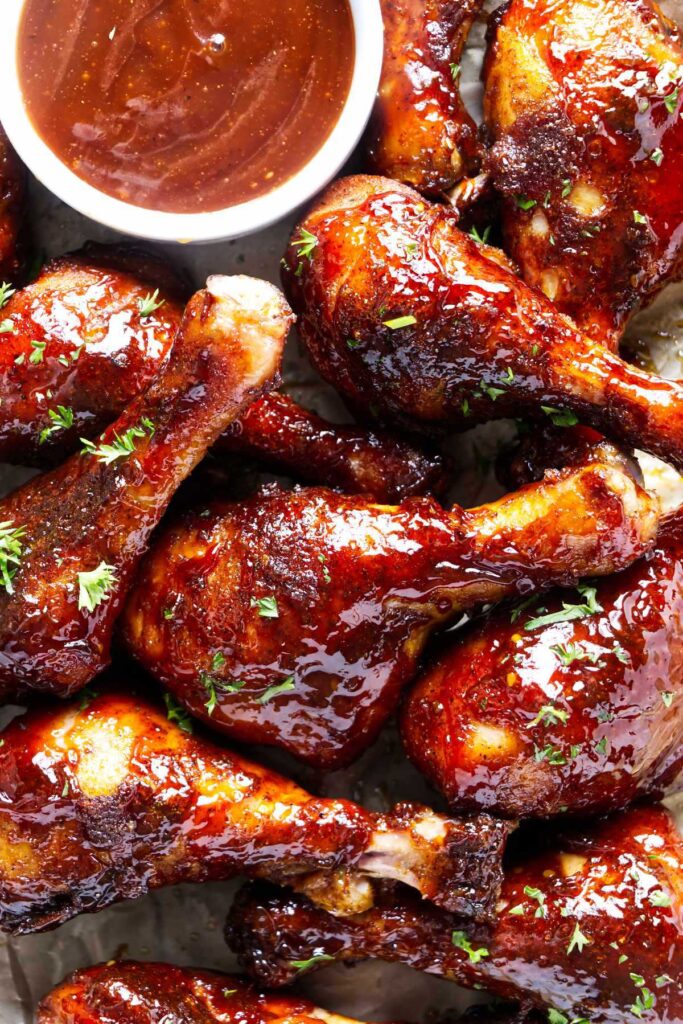
Here’s Why This Recipe Works
Low heat adds smoky flavor: I like to start the drumsticks at 225°F so they have plenty of time to absorb smoky flavor before the outside cooks too quickly.
The hot finish improves the skin: Pellet grills don’t crisp chicken skin very well at low temperatures, so I raise the heat near the end of the cook. It helps the skin tighten while giving the BBQ sauce time to caramelize.
Dark meat gets more tender at a higher temperature: Although chicken is safe to eat at 165°F, I always cook drumsticks to 185°F to 190°F. The extra cooking time allows the connective tissue to break down, making the meat more tender and juicy.
Simple ingredients do the work: A good BBQ rub and a little smoke are all you need to build plenty of flavor. Add BBQ sauce at the end for a sticky, caramelized finish, or leave it off if you prefer dry-rubbed chicken.
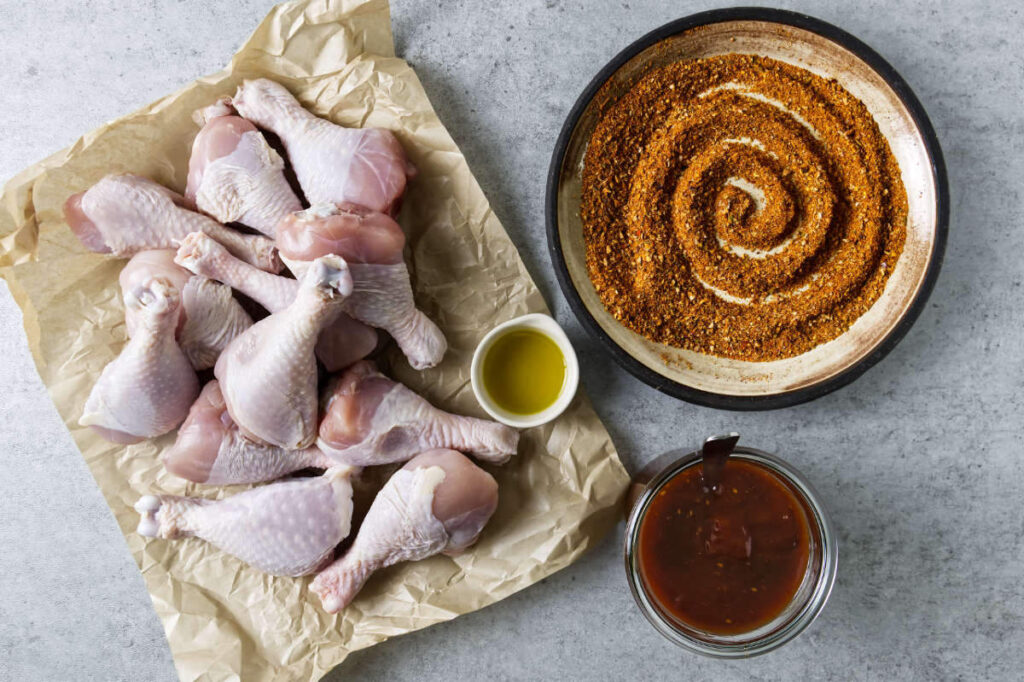
Ingredient Notes
Chicken drumsticks: Choose drumsticks that are similar in size so they cook evenly. Pat them completely dry before seasoning to help the skin brown during the final stage of cooking.
Olive oil: A light coating of oil helps the seasoning stick to the chicken and promotes better browning.
BBQ spice rub: Use your favorite homemade or store-bought BBQ rub. My homemade BBQ spice rub is fast and easy.
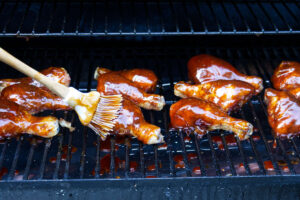
BBQ sauce: This is optional, but it creates a sticky, flavorful glaze. Brush it on during the final stage of cooking so the sugars don’t burn. If you want to make your own, try my Kansas City style bbq sauce.
Recipe Tips
Dry the chicken well: Moisture is the enemy of crispy skin. Taking an extra minute to thoroughly pat the drumsticks dry helps the skin brown more evenly during the high-heat finish.
Don’t stop at low and slow: Smoking adds flavor, but it won’t produce great skin on its own. Finishing the drumsticks at a higher temperature helps render some of the fat under the skin and improves the texture.
Give the smoke room to work: Avoid packing the drumsticks too closely together. A little space allows both the smoke and hot air to circulate around each piece for more even cooking.
Match the pellets to the flavor you want: Mild fruit woods like apple or cherry let the chicken shine, while hickory adds a bolder barbecue flavor. Pecan is a nice middle ground if you want something richer without being overpowering.
Trust your thermometer more than the clock: Cooking times vary depending on the size of the drumsticks, outdoor conditions, and how your pellet grill runs. The internal temperature is the best indicator of doneness.
If you’re planning a cookout or smoking several cuts of meat, my Meat Smoking Calculator and Planner can help you estimate cooking times and keep everything on schedule.
Take advantage of your grill’s features: If your pellet grill has a Super Smoke setting, use it during the first part of the cook while the grill is running at a lower temperature. That’s when the chicken absorbs the most smoke flavor.
Serve these smoked chicken legs with smoked baked beans, coleslaw, mac and cheese, potato salad, or grilled corn.
Frequently Asked Questions
Plan on about 1 hour and 50 minutes to 2 hours total. Smoke the drumsticks at 225°F for 90 minutes, then increase the heat to 375°F and cook another 20 to 30 minutes. Since cooking times can vary, always rely on the internal temperature rather than the clock.
Chicken is safe to eat at 165°F, but drumsticks become noticeably more tender when cooked to 185°F to 190°F because the connective tissue has more time to break down.
Pat the chicken dry before seasoning, leave space between the drumsticks, and finish them over higher heat. That combination produces much better skin than cooking at low temperature the entire time.
Brush it on after the smoking stage, just before increasing the grill temperature. This gives the sauce time to caramelize without burning.
Apple pellets provide a mild, slightly sweet smoke flavor that’s great with chicken. Hickory gives a bolder BBQ flavor, while cherry, pecan, and competition blends are all excellent choices as well.
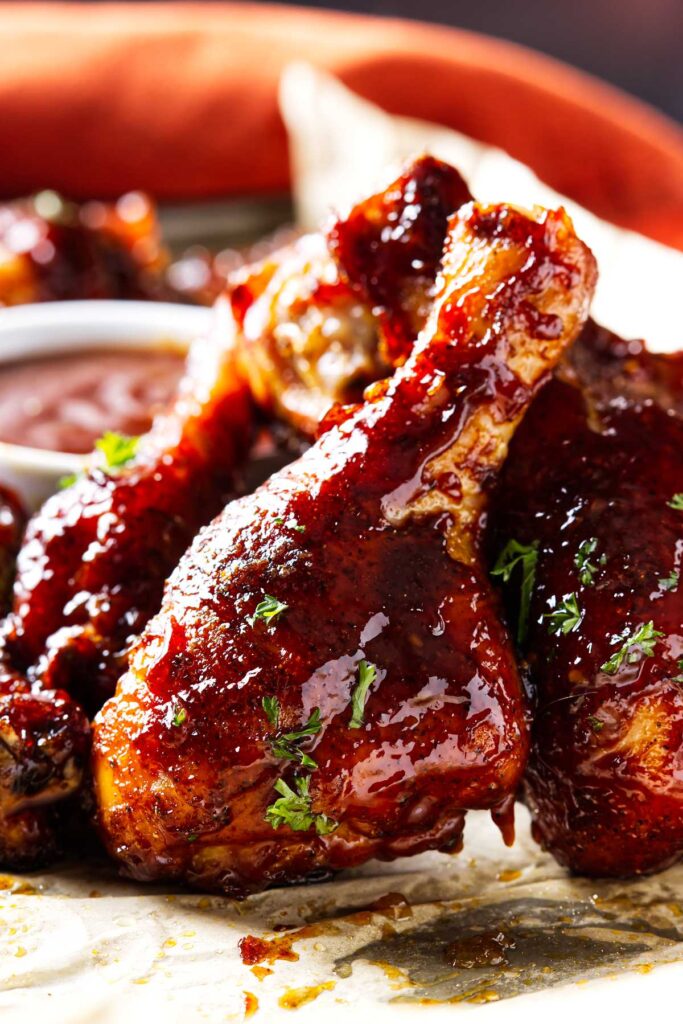
Traeger Smoked Chicken Legs
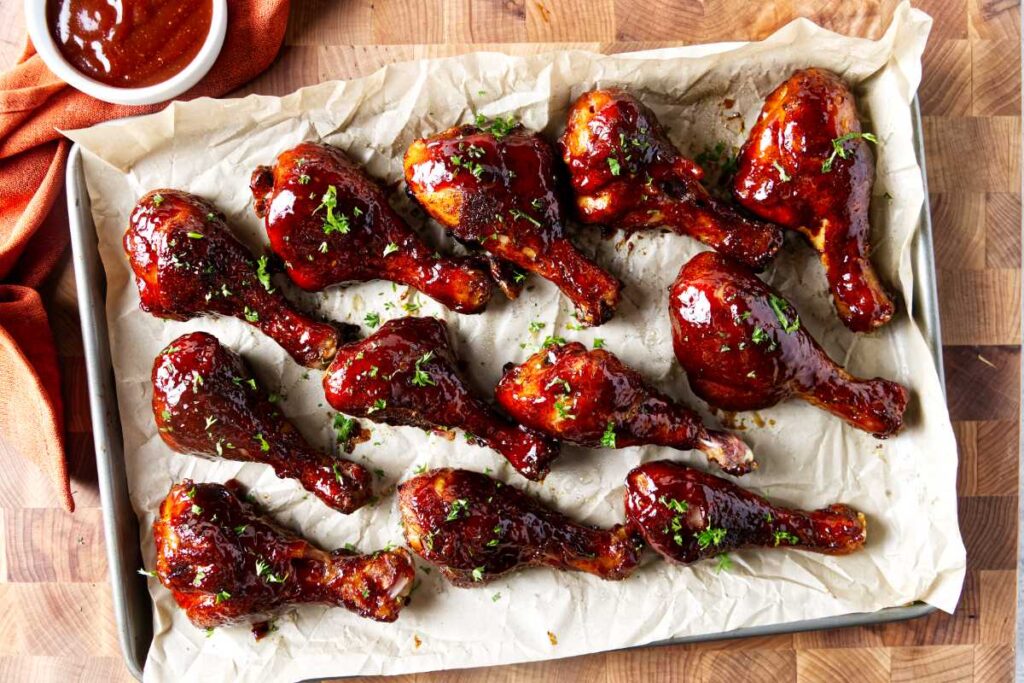
These smoked chicken drumsticks are an easy way to turn an inexpensive cut of chicken into a meal that’s packed with smoky BBQ flavor. Whether you brush them with your favorite sauce or keep them simple with a dry rub, they’re a reliable recipe for weeknight dinners, backyard cookouts, and game day.
If you’re looking for another fun way to use drumsticks, be sure to try our Traeger Stuffed Chicken Legs.
CONNECT WITH A LICENSE TO GRILL!
Be sure to follow us on our social media accounts.
Did you make this recipe? Tell us about it in the comments below!
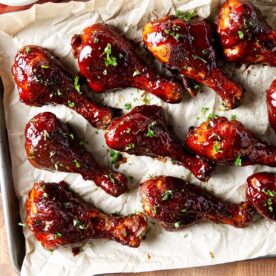
Smoked Chicken Drumsticks
Ingredients
- 12 chicken drumsticks, bone in
- 2 tablespoons olive oil
- ½ cup BBQ Spice Rub
Optional Finish
- BBQ sauce, homemade or storebought
Instructions
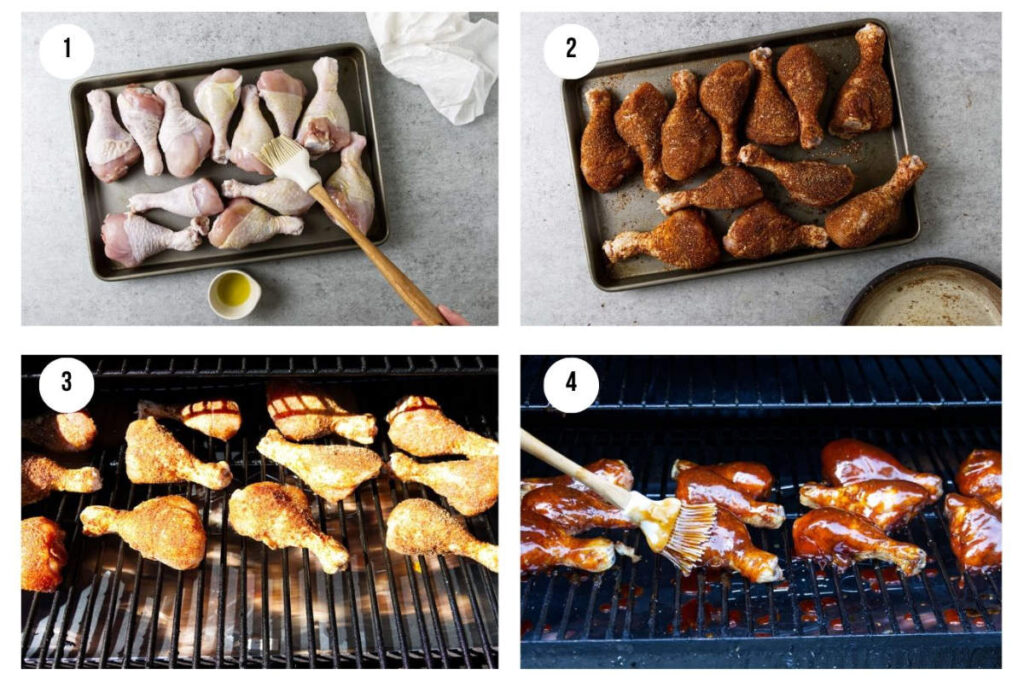
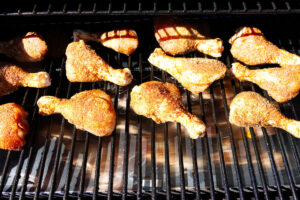
- Set the Traeger (or other pellet grill) to 225°F.
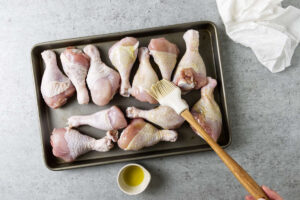
- Pat the drumsticks completely dry with paper towels then brush them lightly with olive oil.

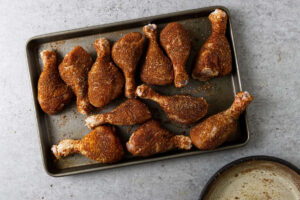
- Coat all sides evenly with the BBQ spice rub. Let them rest while the smoker preheats.
- Arrange the drumsticks directly on the grill grates with a little space between each. Smoke for 90 minutes.
- Increase the grill temperature to 375°F and brush the chicken with BBQ sauce, if desired. Continue cooking another 20–30 minutes, turning once halfway through.
- Cook until the thickest part reaches 185–190°F. Unlike chicken breast, dark meat becomes more tender at these higher finishing temperatures.
Notes
Nutrition
Nutrition information is automatically calculated, so should only be used as an approximation.