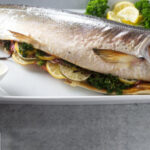
How to Grill a Whole Salmon
How To Grill A Whole Salmon is easier than it looks, and the herb butter adds rich flavor to every tender, flaky bite. A whole salmon makes an impressive centerpiece for sharing around the table. The optional overnight brine seasons the fish thoroughly, helps it stay moist, and can reduce the white albumin that appears as it cooks.
Servings: 12 to 16 servings
Ingredients
For the optional brine
- 3 quarts cold water see notes
- ¾ cups Kosher salt
- ¼ cup brown sugar
For the Grilled Salmon
- 1 salmon whole, cleaned, 3 to 5 pounds
- 3 to 4 tbsp olive oil
- salt to taste
- pepper to taste
- 1 red onion thinly sliced, large
- 8 to 10 cloves garlic thinly sliced
- 2 lemons thinly sliced
- 1 lime thinly sliced
- several sprigs fresh parsley, tarragon, and thyme
For the lemon, garlic, chive butter
- 6 oz butter softened
- 2 cloves garlic minced
- 3 to 4 tbsp fresh chives chopped; see notes
- 1 lemon small, zest only
- 1 tbsp fresh lemon juice
- ¼ tsp salt
- ¼ tsp pepper
Instructions
To brine the salmon
- Combine the sugar, salt, and 3 cups of water in a saucepan. Bring to a simmer and stir until the salt is dissolved. Remove from the heat and add a few cups of ice to cool the solution down. Transfer to a container large enough to hold the salmon and pour in the rest of the water.
- Place the salmon in the brine, cover it and place it in the fridge overnight. (Make sure the brine covers the salmon. If it doesn’t, make some additional brine solution).
For the grilled salmon
- Preheat the grill to 400°F.
- Pat the salmon dry with paper towels. Coat the cavity and outside the salmon with olive oil, then sprinkle all over with salt and pepper (make sure you also get inside the cavity). Coating the outside of the salmon will help prevent it from sticking to the grill.
- Stuff the cavity with slices of onion, garlic, lemon, lime, and sprigs of the herbs.
- Transfer the salmon directly to the hot grill grates and close the lid.
- Cook for 20 to 30 minutes or until a meat thermometer registers 130°F (or 122°F for rare salmon, see notes).
- Make the lemon butter while the salmon cooks.
Lemon Herb Butter
- Melt the butter in a saucepan over medium heat. Add the minced garlic, lemon zest, chives, lemon juice, salt, and pepper.
Serve the salmon
- Place the salmon on a wide platter or cutting board. Pull back the skin on top of the fish. Once you get it started, it will peel right off.
- Starting at the head end, lift on the spine and use a wide spatula to support the flesh on either side of the top fillet as you lift it. The top fillet and the spine will peel right off of the lower fillet. (See the photos above for reference). Next, flip the top fillet over so the spine is on top.
- Pull the spine up and away from the top fillet. Use the spatula to hold the flesh down under the spine.
- Season the salmon with salt and pepper and serve with the lemon herb butter.
Notes
Make Enough Brine
If you opt to brine the salmon fillet first, make sure you use enough water to cover the salmon. The water may vary depending on the size of your salmon and the size of the container you place it in. If you need more water, add 1 tablespoon of salt and 1 teaspoon of sugar for each additional cup of water.Fresh Herb Substitutions
You can substitute the fresh herbs with any that you have on hand. Some great ideas that go well with herb butter and salmon are dill, savory, thyme, rosemary, sage, and basil.Salmon Temperature
The FDA recommends cooking finfish like salmon to 145°F. However, salmon gets pretty dry when it is cooked to that temperature. I prefer cooking salmon to a temperature between 122°F and 130°F for a tender, moist, and flaky texture. Use your judgment regarding the temperature.Why Brine The Salmon
Brining the salmon is an optional step, but it improves the flavor and texture considerably. The brine helps season the meat more thoroughly, and it helps the meat stay moist and juicy. It also helps prevent the salmon from leaching out white albumin while cooking and making a prettier presentation. The white albumin is not a problem to eat, but some people get a bit squeamish when they see it on the surface of cooked salmon.Removing The Spine
When you separate the salmon fillets and remove the spine, if the salmon is cooked well-done, it will separate much easier than if it is cooked rare. For rare salmon, you may need to pry a thin spatula between the fillet and the spine.Grill Temperature And Timing
If the heat on your grill fluctuates, the cooking time will vary. The best way to be certain that the salmon is finished cooking is to use a meat thermometer.Lemon Garlic Chive Butter
Add the minced garlic and lemon zest along with the chives, lemon juice, salt, and pepper when making the butter so all the listed butter ingredients are included.Nutrition
Serving: 1g | Calories: 160kcal | Carbohydrates: 7g | Protein: 4g | Fat: 14g | Saturated Fat: 6g | Polyunsaturated Fat: 7g | Cholesterol: 32mg | Sodium: 5428mg | Fiber: 1g | Sugar: 4g